TL;DR:
- Choosing the right pool tile in Florida demands materials that withstand harsh UV, pool chemicals, and heavy foot traffic. Porcelain is favored for its low water absorption, durability, and wide style options, making it ideal for various zones, while glass tiles offer a luxurious shimmer but require precise installation and maintenance. Proper installation and zone-specific ratings are crucial, as material choice alone cannot prevent failure without skilled craftsmanship and appropriate maintenance.
Picking the right pool tile in Florida is genuinely harder than most homeowners expect. You’re not just choosing a color that looks good on a showroom floor. You’re selecting a material that needs to survive relentless UV exposure, fluctuating pool chemistry, heavy foot traffic on wet surfaces, and the kind of heat that Central Florida dishes out from May through October. Orlando and Jacksonville homeowners who get this decision right end up with a pool that stays beautiful for decades. Those who rush it often face cracking, staining, or dangerous slippery surfaces within a few years.
Table of Contents
- How to choose pool tile: key factors for Florida pools
- Porcelain tile: the workhorse of pool renovation
- Glass tile: luxury shimmer with special installation needs
- Natural stone: organic beauty with extra care requirements
- Comparing top pool tile types: which is best for your renovation?
- Our take: the material isn’t the whole story
- Ready to renovate your Orlando or Jacksonville pool?
- Frequently asked questions
Key Takeaways
| Point | Details |
|---|---|
| Porcelain leads in durability | Porcelain tile lasts up to 30 years, resists fading, and handles Florida weather. |
| Glass delivers luxury | Glass tiles create a stunning look but need expert installation with epoxy grout. |
| Stone offers natural style | Stone tiles are slip-resistant but require routine maintenance and sealing. |
| Slip-resistance matters | Choose textured tiles for decks and steps to boost safety around your pool. |
How to choose pool tile: key factors for Florida pools
Now that you know the decision goes beyond color and style, let’s break down what factors matter most for Orlando and Jacksonville pools.
Florida pools operate in one of the harshest environments in the country. The combination of strong sunlight, high humidity, and aggressive pool chemicals means that tile materials face constant stress from multiple directions at once. A tile that performs beautifully in a mild climate may crack, fade, or pop off the wall after a single Florida summer.
Here are the core factors every homeowner should evaluate before picking a tile:
- Slip resistance. This is non-negotiable. The DCOF (wet dynamic coefficient of friction) standard requires a minimum of 0.42 for wet areas under ANSI A137.1, but pool decks and steps should meet 0.60 or higher per TCNA, ADA, and OSHA guidance. Textured porcelain and natural stone consistently outperform glossy glass tiles on walking surfaces.
- Water absorption rate. The lower the absorption, the better the tile holds up when submerged or repeatedly wet. Porcelain’s very low absorption keeps it stable; high-absorption materials can swell, crack, or delaminate.
- UV and chemical resistance. Pool chemicals, especially chlorine and pH adjusters, interact with tile surfaces over time. Some materials etch, fade, or lose their finish without proper chemical balance. Florida’s intense sunlight accelerates color fading in materials that aren’t UV-stable.
- Zone compatibility. Not every tile works everywhere. Deck tiles need heavy slip resistance. Waterline tiles need to handle the freeze-thaw of pool water level fluctuations and chemical concentration. Interior tiles need to be fully submersion-rated.
- Maintenance requirements. Some tiles are nearly maintenance-free. Others need regular sealing, careful chemical monitoring, or specialized cleaning products. Knowing this upfront prevents unpleasant surprises down the line.
“Matching tile to its zone isn’t optional,” says the National Tile Authority. “Using the wrong tile in the wrong location is one of the most common and preventable causes of early pool tile failure.”
Pro Tip: Before finalizing any tile choice, ask your contractor to confirm that each tile is specifically rated for the zone where it will be installed. Waterline tiles, interior tiles, and deck tiles all carry different ratings, and mixing them up creates real problems.
For homeowners exploring the visual side of these decisions, browsing pool tile design ideas can help you see how different materials actually look in finished Florida pools before you commit.
Porcelain tile: the workhorse of pool renovation
With selection criteria in mind, let’s dive into the top tile choices, starting with one of the most common and reliable options on the market.
Porcelain is the go-to choice for the majority of Florida pool renovations, and the reasons are straightforward. It’s not just popular because it looks good. It’s popular because it genuinely performs better than most alternatives across almost every category that matters for outdoor pools.
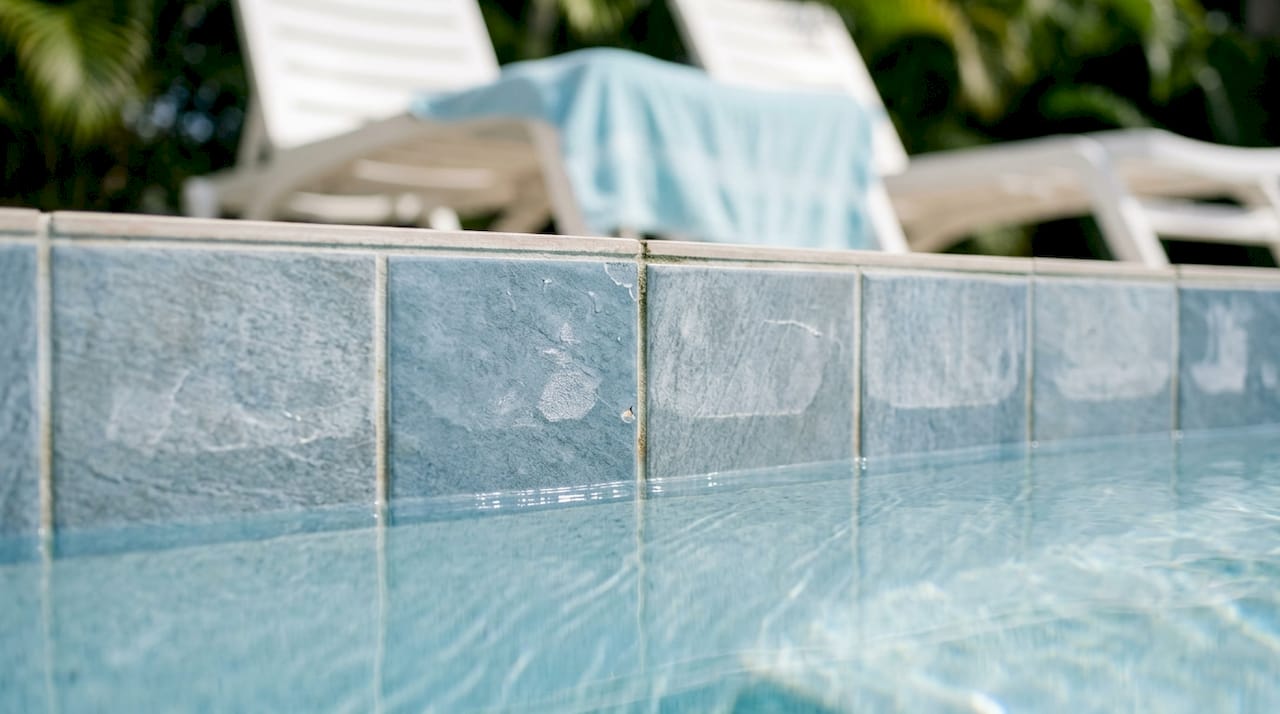
The most important technical detail is its absorption rate. Porcelain tile absorbs 0.5% or less water, which makes it one of the densest and most durable tile options available. That extremely low absorption means water doesn’t penetrate the tile body, which prevents the freeze-thaw cracking and bond failure that destroys lesser materials. It’s also highly resistant to UV rays, pool chemicals, and surface fading. Even after years of Florida sun and chlorine exposure, quality porcelain tiles hold their color and finish far better than other options.
Here’s what makes porcelain stand out for pool applications specifically:
- Absorption rate at or below 0.5%, meeting the strict threshold required for submerged and wet-zone applications
- 20 to 30 year manufacturer lifespan with proper installation and routine care
- Available in slip-resistant textures that meet or exceed TCNA and OSHA standards for wet walking surfaces
- Works in every pool zone: deck, waterline, and interior surfaces
- Resistant to UV fading, chemical degradation, and surface etching
- Extremely wide range of styles and colors, including realistic stone, wood, and concrete looks without the maintenance those materials require
Stat to know: Porcelain tile’s 20 to 30 year lifespan under proper care makes it one of the most cost-effective investments in pool renovation when measured over the life of the surface.
One thing that surprises many homeowners is how closely modern porcelain can mimic natural stone, travertine, or slate. You get the organic look without the chemical sensitivity or sealing requirements those natural materials demand. That’s a significant advantage in Florida’s pool environment.
Pro Tip: When shopping for porcelain, look for tiles explicitly rated for “pool” or “submerged” applications. Not all porcelain is the same. Floor-grade porcelain designed for indoor use may not carry the chemical resistance or mounting specs you need for a pool renovation.
Seeing real examples helps enormously. Browsing examples of pool finishes shows how porcelain performs in actual Florida pools. And if you’re weighing whether the upgrade is worth the investment, reviewing the benefits of upgrading pool tiles lays out the financial and practical case clearly.
Glass tile: luxury shimmer with special installation needs
Another eye-catching choice for modern pools is glass tile, but it requires a bit more know-how than most homeowners realize.
Glass tile delivers visual impact that no other material quite matches. Light passes through it, reflects off the water, and creates that shimmering iridescent effect you see in high-end resort pools. If you want your pool to look like something out of a luxury hotel, glass tiles at the waterline or submerged interior walls can absolutely achieve that.
But glass comes with real limitations that you need to understand before committing:
- Not suitable for decks or steps. Glossy glass surfaces are dangerously slippery when wet. Glass tile belongs underwater or at the waterline, not on any surface where people walk.
- Requires epoxy mortar and grout. Standard thinset mortars don’t bond properly to glass because of the material’s different thermal expansion rate. Epoxy mortar and grout systems are necessary to prevent bond failure, and installation requires a perfectly flat substrate. This is more technically demanding and more expensive than standard tile installation.
- Vulnerable to pH imbalance. If your pool chemistry runs acidic or heavily alkaline for extended periods, glass tiles can develop surface etching or cloudiness that’s difficult to reverse.
- Glass can disbond from mortar mismatch if the wrong adhesive system is used, which is why this is one of the most commonly misinstalled pool tiles when homeowners cut corners on materials or hire inexperienced contractors.
- Higher cost than porcelain. Material costs are higher, and the more demanding installation adds to labor expenses. Full glass tile pools are rare for this reason. Most homeowners use glass as an accent at the waterline or in a feature wall.
“Glass tile is a premium accent material. When it’s installed correctly with the right epoxy systems and a properly prepared substrate, it lasts beautifully. When it’s installed with the wrong materials, it fails quickly and expensively.”
For visual inspiration on how glass accents work alongside other materials in modern Florida pools, exploring pool tile design inspiration gives you a realistic sense of what’s achievable.
Natural stone: organic beauty with extra care requirements
For a natural or rustic look, many homeowners consider stone tile, but it’s important to know the care involved before making this choice.
Travertine, slate, and marble are the most popular natural stone options for Florida pools. Each brings a unique, organic appearance that manufactured tiles struggle to replicate authentically. Travertine in particular has been a staple of Florida pool decks for decades because its natural texture provides good slip resistance and its warm tones work beautifully with outdoor Florida landscaping.
Here’s what you need to know about stone tile in pool applications:
- Natural texture provides built-in slip resistance. This is one of stone’s strongest advantages for decks and pool steps, where textured surfaces are preferred over smooth or glossy finishes.
- Sensitive to pool chemistry. Natural stone, particularly marble and travertine, can etch or discolor when exposed to improper pH levels. Keeping your pool chemistry balanced isn’t optional with stone tile. It’s essential.
- Requires regular sealing. Unsealed stone is porous and absorbs pool water, chemicals, and environmental stains. Sealing every one to two years, depending on exposure, is standard maintenance.
- Best suited for decks and accent areas rather than fully submerged pool interiors. Using porous stone on interior walls or floors creates ongoing maintenance challenges and potential bond issues over time.
- Each piece is unique. The natural variation in stone is a design feature many homeowners love, but it also means installation requires careful selection and layout to achieve a consistent look.
Pro Tip: If you love the look of travertine or slate but don’t want the sealing and chemical sensitivity that comes with natural stone, modern porcelain tiles engineered to replicate these materials are a practical alternative. You get the aesthetic without the ongoing maintenance commitment.
For real-world looks at how stone finishes appear in completed pools, natural finish examples provide a useful reference. And understanding tile benefits for homeowners helps clarify where stone earns its value versus where another material might serve you better.
Comparing top pool tile types: which is best for your renovation?
After understanding each material, it’s helpful to see them side by side.
| Feature | Porcelain | Glass | Natural stone |
|---|---|---|---|
| Water absorption | ≤0.5% (excellent) | Very low | Medium to high |
| Slip resistance | Excellent (textured) | Poor (glossy) | Good (textured) |
| UV resistance | Excellent | Good | Moderate |
| Chemical resistance | Excellent | Moderate | Low to moderate |
| Best zones | Deck, waterline, interior | Waterline, interior accents | Deck, accents |
| Maintenance | Very low | Low to moderate | Moderate to high |
| Lifespan | 20 to 30 years | 15 to 25 years | 10 to 20 years |
| Cost (relative) | Moderate | High | Moderate to high |
| Installation difficulty | Moderate | High (epoxy required) | Moderate |
Professionals prefer epoxy systems for glass despite the higher installation cost and complexity, because the alternative leads to disbonding failures that cost far more to fix later.
Here’s a simple process for narrowing your choice:
- Identify your priority zones. Deck safety? Waterline aesthetics? Interior durability? Each zone has a leading material.
- Set your maintenance tolerance. If you want low ongoing upkeep, porcelain wins every time. If you’re willing to seal and monitor chemistry carefully, stone delivers a look nothing else matches.
- Establish your budget. Porcelain gives the best performance-to-cost ratio. Glass is worth the premium for accent applications. Stone requires factoring in long-term sealing and maintenance costs.
- Match style to function. Don’t choose a glossy glass tile for pool steps because it looks stunning in photos. The safety tradeoff isn’t worth it.
- Get professional input. Every Florida pool has different conditions, sun exposure, and existing substrate conditions. A site assessment from a qualified installer is the best way to confirm your shortlist before you spend money.
Reviewing common renovation mistakes before starting your project can also save you from decisions that look good on paper but create real problems in practice.
Our take: the material isn’t the whole story
Here’s something that years of working on pools in Florida teaches you: most tile failures aren’t material failures. They’re installation and maintenance failures. We’ve seen premium glass tile installed beautifully with proper epoxy systems that looks perfect after fifteen years. We’ve also seen good porcelain fail within two seasons because the substrate was uneven, the grout was wrong, or the chemical balance was neglected.
The tile you choose matters. It matters a lot. But the installer you choose matters just as much. Florida’s climate does not forgive shortcuts. An uneven substrate behind a large-format porcelain tile creates stress points that lead to cracking. The wrong mortar under glass tile leads to disbonding within a few seasons. Stone left unsealed stains in ways that can’t always be reversed.
Our honest recommendation is this: spend less time agonizing over which material looks prettiest in a catalog, and more time making sure whoever is installing it has real, specific experience with pool tile in Florida conditions. The right material installed wrong will always underperform the second-best material installed correctly.
Ready to renovate your Orlando or Jacksonville pool?
At Classic Marcite, we’ve been renovating pools across Orlando and Jacksonville since 1988, with over 100,000 pools completed across residential, commercial, and international projects. We know Florida’s climate, Florida’s pools, and exactly how each tile type performs in real conditions.

Whether you’re leaning toward durable porcelain for your deck, a glass tile accent at the waterline, or a natural stone surround that transforms your outdoor space, our team can walk you through every option with zero pressure. As the largest Pebble Tec® applicator in Central Florida, we bring both material expertise and installation precision to every project. Request your free estimate today and let’s figure out exactly what your pool needs.
Frequently asked questions
What pool tile is most resistant to Florida’s sun and chemicals?
Porcelain tile is the top choice for Florida pools because it is UV and chemical resistant with an absorption rate at or below 0.5%, making it durable against sun, chlorine, and pH fluctuations over decades.
Can you use regular ceramic tile in pools?
No. Ceramic tile absorbs too much water to hold up in submerged or consistently wet pool environments, and it will eventually crack, pop, or fail at the bond layer.
Which tile is safest for pool steps or decks?
Textured porcelain and natural stone are the safest options, as both consistently meet the DCOF 0.60 or higher slip resistance standard recommended by TCNA, ADA, and OSHA for wet pool walking surfaces.
Are glass tiles hard to maintain in pools?
Glass tiles are relatively low maintenance, but they require careful pH balance and must be installed with proper epoxy grout to prevent disbonding and surface damage over time.
Is it worth hiring a pro to install pool tile?
Absolutely. Correct installation, particularly for glass tiles and large-format porcelain, requires a flat substrate and proper epoxy systems that most DIY attempts can’t reliably achieve, and installation errors lead to expensive repairs.