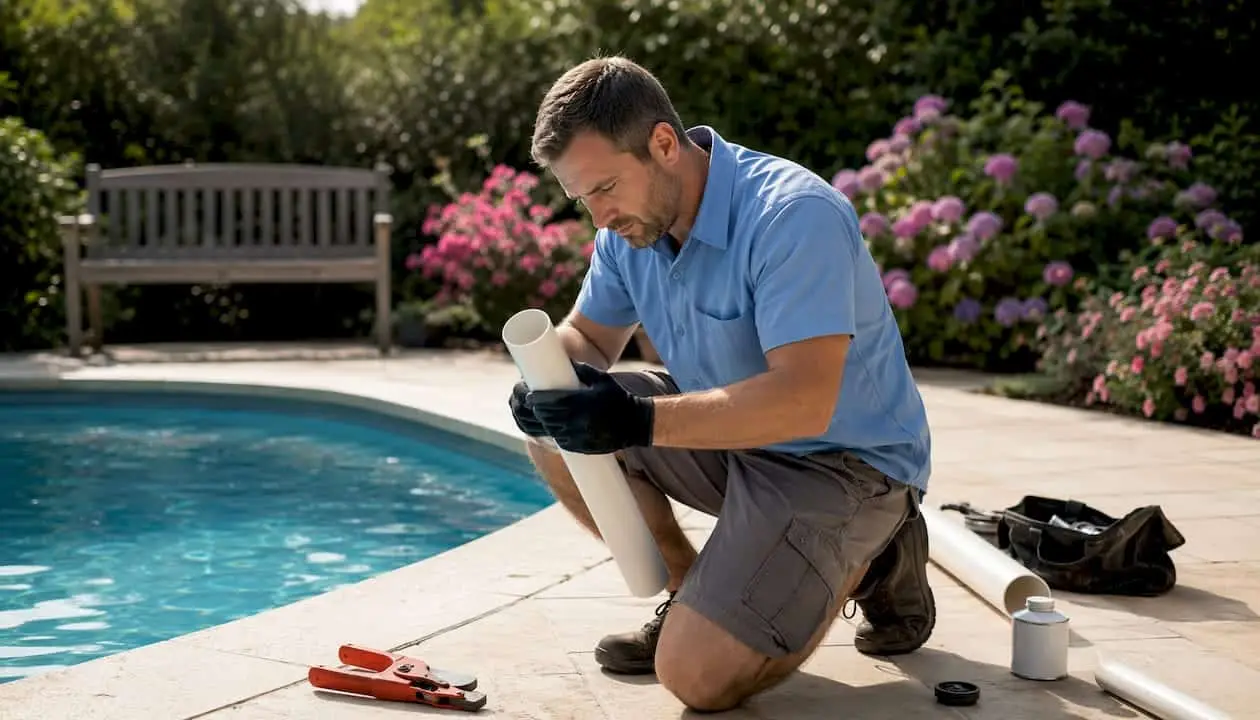
PVC piping in pools refers to polyvinyl chloride plastic pipe specifically selected for swimming pool plumbing systems. It carries water from your skimmer and main drain to the pump and filter, then returns treated water back to the pool. Three types cover nearly every residential application: rigid PVC, flexible PVC, and CPVC. Each serves a distinct role based on location, temperature exposure, and pressure demands.
- Rigid Schedule 40 PVC: The standard for inground pool main lines, buried underground
- Flexible PVC (Spa Flex): Pliable pipe used in accessible, above-ground connections
- CPVC: Chlorinated PVC rated for high-heat zones near heaters and pumps
PVC dominates pool plumbing because it resists chlorine, handles sustained pressure, and costs far less than copper. Not all PVC labeled as such meets pool-specific requirements, so understanding the differences between types is the first step toward making sound decisions about your pool’s plumbing.
What types of PVC piping are used in pool plumbing?
Rigid Schedule 40 PVC is the industry standard for inground pool plumbing, and for good reason. It’s stiff, white, and built to stay buried underground for decades without crushing or degrading. Pool professionals overwhelmingly prefer it for main suction and return lines because its wall thickness and pressure tolerance far exceed what a residential pool demands.
Flexible PVC, sometimes called Spa Flex, is made from the same polyvinyl chloride base but with plasticizers added to make it bendable. That flexibility makes it genuinely useful in tight equipment pad spaces where rigid pipe would require multiple fittings. The tradeoff is durability. Flexible PVC is not rated for permanent underground pool plumbing because subterranean pests like termites and earwigs can chew through it, and it’s more vulnerable to chemical degradation from high chlorine levels than rigid pipe.
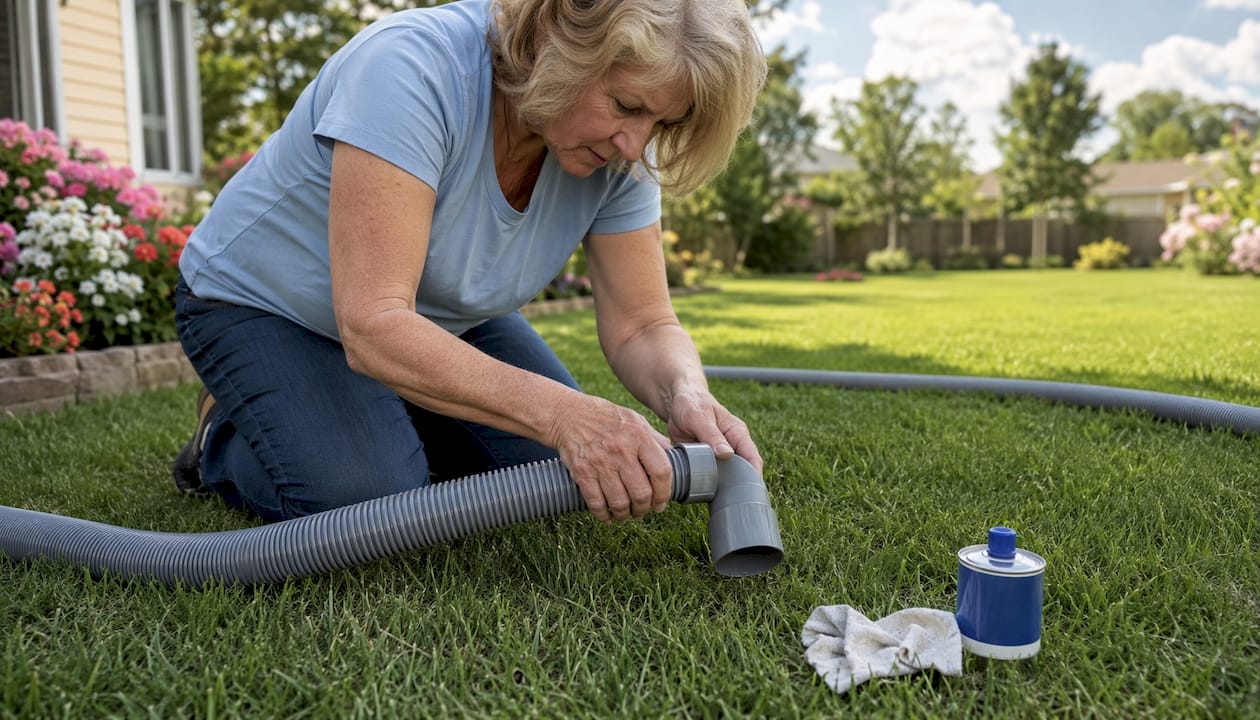
CPVC, or chlorinated polyvinyl chloride, looks similar to rigid PVC but is typically gray. The extra chlorination step in its manufacturing process raises its temperature rating to 200°F, compared to 140°F for standard Schedule 40 or 80 PVC. That difference matters at the heater inlet and outlet, where standard PVC can soften or shrink over time.
Two less common options still appear in older pools:
- Copper pipe: Found in pools built before PVC became standard. Copper is more expensive, harder to work with, and no longer recommended for new pool installations.
- Black poly pipe (HDPE): A flexible black hose that preceded PVC. Some older pools still have it, and it offers better chemical resistance than flexible PVC, but it’s rarely used in new construction.
The choice between rigid and flexible PVC largely comes down to balancing installation ease against long-term durability. For any main underground line, rigid Schedule 40 wins.
How do you read pipe markings, sizing, and pressure ratings?
Every PVC pipe manufactured for pool use carries printed markings that tell you exactly what you’re working with. Pool PVC pipe markings include the schedule number, pressure rating, ASTM standard, and nominal diameter. Learning to read them takes about two minutes and can save you from installing the wrong pipe in the wrong place.
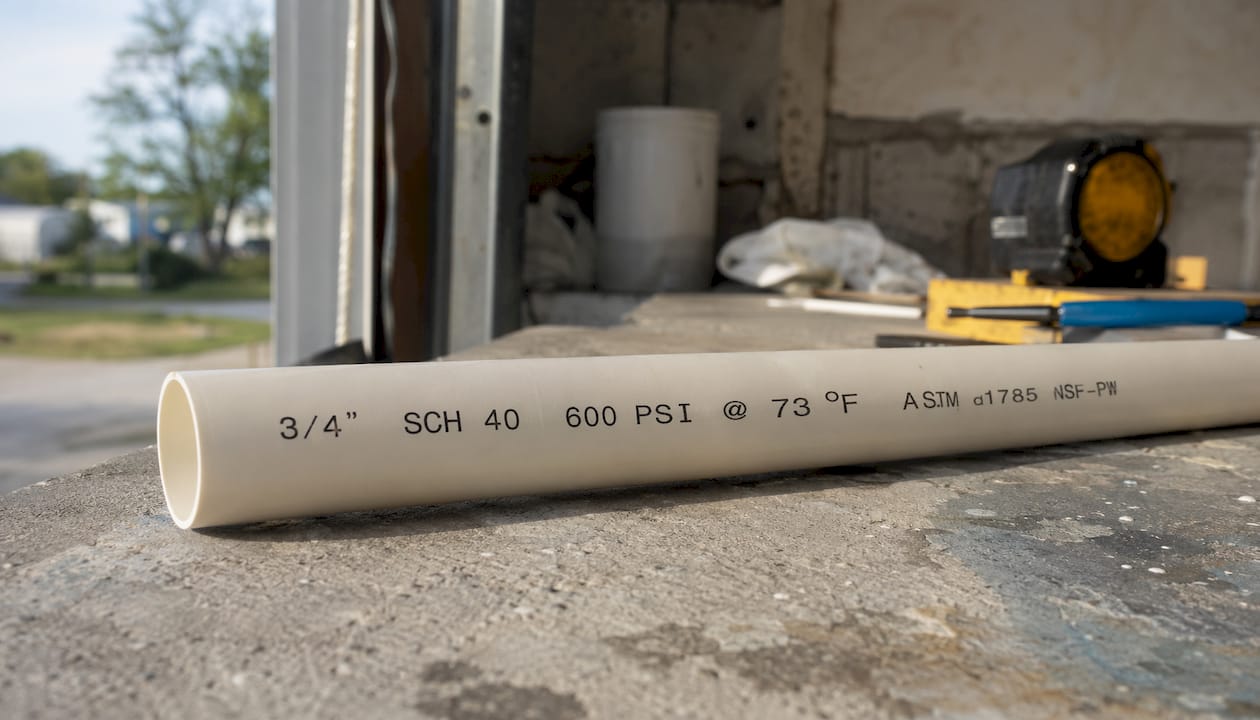
Schedule numbers describe wall thickness relative to outside diameter. Schedule 40 is the most common for residential pools. Schedule 80 has the same outside diameter but thicker walls, giving it a 6% smaller internal diameter and higher pressure tolerance. Schedule 80 costs significantly more and is rarely necessary for standard home pools.
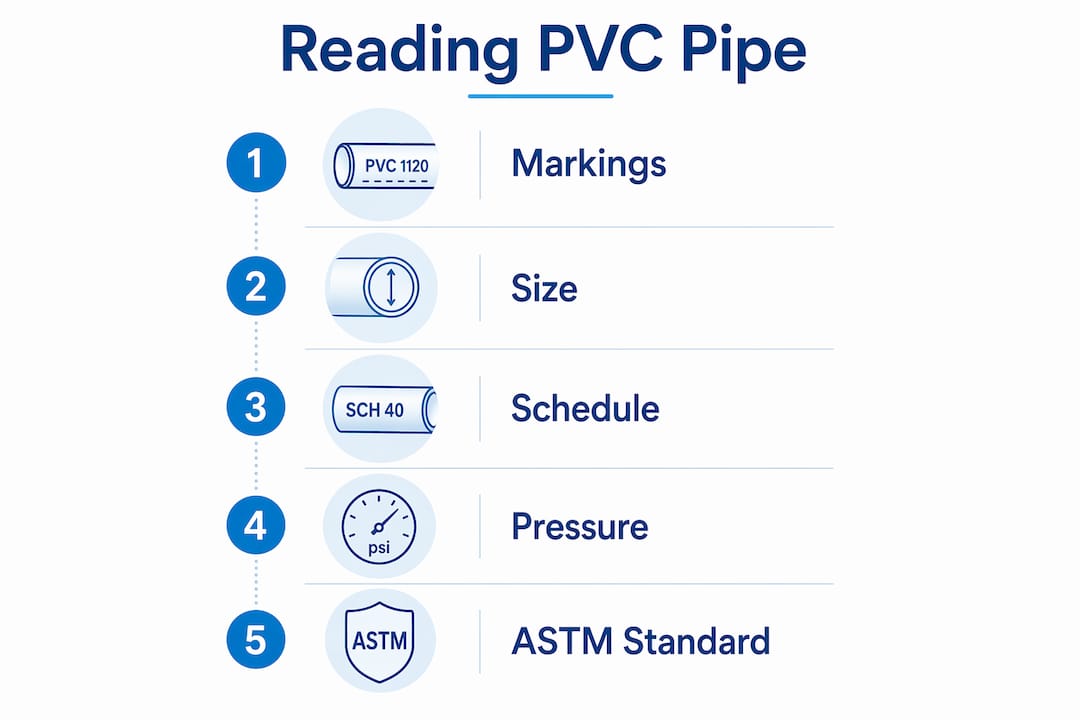
Nominal vs. actual diameter trips up a lot of homeowners. A pipe labeled “2-inch” does not measure 2 inches across. A 1.5-inch nominal PVC pipe has an actual outer diameter of 1.90 inches, and a 2-inch nominal pipe measures 2.375 inches across. Always go by the nominal size when ordering fittings.
Inground pools typically use 1.5-inch or 2-inch PVC pipe. 2-inch diameter pipe is preferred for main runs because its larger bore reduces friction, lowers system pressure, and improves circulation efficiency. Smaller 0.75-inch or 1-inch pipe sometimes appears on overflow lines, chlorinator connections, or booster pump feeds.
| Pipe Type | Nominal Size | Pressure Rating | Common Use |
|---|---|---|---|
| Schedule 40 PVC | 1.5 in | 200 psi | Suction and return lines |
| Schedule 40 PVC | 2 in | — | Main pool runs |
| Schedule 80 PVC | 2 in | — | High-pressure or threaded fittings |
| CPVC | 1.5–2 in | Varies | Heater inlet/outlet connections |
Pipe markings also reference ASTM standards, which confirm the pipe meets testing requirements for pressure and material composition. If a pipe lacks ASTM markings, it likely doesn’t meet pool-grade specifications.
Pro Tip: When inspecting existing pool pipes, look for the printed markings along the pipe’s length. If they’ve faded, measure the outer diameter and count the wall thickness to determine the schedule. A digital caliper makes this quick and accurate.
What fittings does pool PVC piping require?
Fittings are where pool plumbing mistakes most often happen. Schedule 40 pressure fittings are the correct choice for pool plumbing, and the distinction between pressure fittings and DWV fittings is not cosmetic. DWV (drain, waste, and vent) fittings have only about 0.5 inches of socket depth for gluing, while pressure fittings glue the pipe to a depth of over 1 inch. That extra depth creates a bond strong enough to hold against the sustained pressure of a running pool pump.
Using the right fitting material is equally important. Solvent welding, the chemical bonding process that joins PVC pipe and fittings, only works correctly when the pipe and fitting are made from the same material. PVC pipe takes PVC fittings; CPVC pipe requires CPVC fittings. Mixing materials produces a weak bond that can fail under pressure.
Common fittings used in pool plumbing systems:
- Couplings: Join two straight sections of pipe
- 90° and 45° elbows: Change pipe direction
- Tees: Split or combine flow at a junction
- Reducers: Connect pipes of different diameters
- Male and female threaded adapters (MTA/FTA): Connect PVC to threaded equipment ports
Schedule 80 fittings and CPVC fittings are available for high-pressure zones or heated areas near the pump and heater. They cost more than standard Schedule 40 fittings but are the right call anywhere temperature or pressure demands exceed what Schedule 40 handles comfortably. Above-ground pools sometimes use flexible hose connections with hose adapters instead of glued fittings, but rigid PVC with proper pressure fittings remains the more durable setup.
How long does pool PVC piping last, and what affects its lifespan?
Rigid Schedule 40 PVC can last over 75 years when properly installed and maintained. That’s a longer service life than most pools themselves. The pipe doesn’t corrode, doesn’t rust, and resists nearly all the chemicals found in a properly balanced pool system.
Poor water chemistry is the primary threat to PVC longevity. Chronically low pH or high chlorine levels can degrade pipe walls and fittings over time, and faulty installation or poor water chemistry can cut that lifespan in half. The pipe itself is durable; the conditions around it determine whether that durability holds.
Several other factors affect how long your pool’s plumbing lasts:
- UV exposure: Sunlight degrades PVC over time. Exposed above-ground sections should be painted or wrapped to block UV.
- Ground movement: Soil shifting from freeze-thaw cycles or tree root growth can stress buried pipe joints.
- Pest damage: Flexible PVC underground is particularly vulnerable to termites and earwigs. Rigid PVC is far more resistant.
- Improper support: Piping must be supported at sufficiently close intervals to prevent sagging, which stresses joints and can cause cracks over time.
Maintaining proper pool water chemistry is the single most effective thing you can do to protect your plumbing. Balanced pH, alkalinity, and sanitizer levels keep the water from attacking pipe walls and fittings from the inside. A well-maintained system with rigid Schedule 40 pipe should give you decades of trouble-free service.
How does pool PVC differ from regular household PVC pipe?
The pipe in your pool’s plumbing system and the pipe under your kitchen sink are both called PVC, but they’re selected for very different jobs. Pool PVC is chosen for its ability to handle sustained pressure, continuous chemical exposure, and underground burial. Standard household PVC is typically approved for potable water supply or drainage, not for the pressure and chemical environment of a pool recirculation system.
The key distinctions come down to specification and application:
- Pressure rating: Pool plumbing runs under constant pump pressure. Pipe selected for pool use must carry a pressure rating appropriate for that load, confirmed by ASTM markings on the pipe.
- Chemical exposure: Pool water contains chlorine, pH adjusters, and algaecides at concentrations that exceed what household drain pipe typically encounters.
- Burial suitability: Pool main lines run underground. Not all PVC grades are rated for direct burial, and flexible PVC specifically is not rated for permanent underground pool plumbing.
- Temperature demands: Near heaters and pumps, standard PVC rated to 140°F can fail. CPVC, rated to 200°F, is the correct material for those connections.
The International Swimming Pool and Spa Code (ISPSC) requires that pipe, fittings, and components used in pool systems be listed and labeled in accordance with NSF 50 or NSF 14. Those certifications confirm the material is safe for contact with pool water and meets performance standards. A pipe without those markings may be physically identical to a compliant pipe but lacks the verified testing that confirms it belongs in a pool system.
Terminology can blur these distinctions. A hardware store employee calling something “PVC pipe” doesn’t mean it’s pool-grade. Always check the schedule number, ASTM designation, and NSF certification before using any pipe in a pool plumbing application.
How to identify and maintain your pool’s PVC piping system
Finding your pool’s pipe markings is easier than most homeowners expect. Look along the length of any exposed pipe near the equipment pad. The printed text runs lengthwise and includes the nominal diameter, schedule number, pressure rating, and ASTM standard. If the markings have faded from sun exposure, measure the outer diameter with a caliper and compare it to standard nominal sizes to determine what you have.
Routine inspection keeps small problems from becoming expensive repairs. Walk the equipment pad area every few months and look for:
- Wet spots or mineral deposits around fittings, which signal slow leaks
- Cracks or discoloration on exposed pipe sections
- Soft or deformed pipe near the heater, which indicates heat damage from using standard PVC where CPVC belongs
- Any sign of pest activity near flexible pipe sections
Proper pool maintenance practices extend well beyond the water itself. The area around your equipment pad should stay clear of debris and standing water, both of which accelerate wear on exposed fittings and pipe ends.
Water chemistry is the most direct lever you have over pipe longevity. Test your water at least weekly during swim season and keep pH between 7.2 and 7.6, total alkalinity between 80 and 120 ppm, and free chlorine within the manufacturer’s recommended range for your sanitizer system. Chronically aggressive water attacks PVC from the inside, softening walls and weakening glued joints over years of exposure.
Installation practices matter as much as ongoing maintenance. All suction piping should slope toward the pump, and every pipe run needs support at regular intervals to prevent sagging. Provision for expansion and contraction is especially relevant in Florida’s climate, where temperature swings between seasons put stress on long pipe runs. If you’re planning any new plumbing work, common pool issues often trace back to installation shortcuts taken during the original build.
Pro Tip: If you notice air bubbles consistently entering your pool returns, that’s a strong early indicator of a suction-side leak in the plumbing. Don’t wait for the pump to lose prime before investigating. Catching a small crack or loose fitting early costs far less than a full pipe repair after the soil around a buried line has been disturbed.
Key Takeaways
Rigid Schedule 40 PVC is the correct pipe for inground pool main lines, rated to handle sustained pump pressure and lasting over 75 years with proper installation and balanced water chemistry.
| Point | Details |
|---|---|
| Rigid Schedule 40 PVC is the standard | It handles sustained pump pressure and can last over 75 years when properly installed. |
| CPVC belongs near heat sources | Rated to 200°F vs. 140°F for standard PVC, making it the right choice at heater and pump connections. |
| Flexible PVC has real limits | Not rated for permanent underground use; vulnerable to pests, crushing, and chemical degradation. |
| Pressure fittings are non-negotiable | Schedule 40 pressure fittings glue to over 1 inch depth, far stronger than DWV fittings for pool pressure loads. |
| Water chemistry protects your pipes | Poor chemical balance can cut PVC pipe lifespan in half, regardless of pipe quality or installation. |
When your pool needs more than new pipes, Classicmarcite brings over 35 years of experience to pool resurfacing in Florida, serving homeowners across Orlando, Jacksonville, and beyond. As the largest Pebble Tec® applicator in Central Florida, with more than 100,000 pools resurfaced, Classicmarcite handles everything from interior finish upgrades to full pool remodeling. If your pool’s surface is showing its age alongside aging plumbing, a full renovation addresses both at once.

Contact Classic Marcite for a free estimate on pool resurfacing in The Villages or any Florida community. Your pool deserves a finish that lasts as long as the plumbing behind it.
