TL;DR:
- A pool timer automates pump operation, saving energy, extending equipment life, and improving water quality.
- Choosing the correct timer type and scheduling based on pool size and sun exposure optimizes efficiency and reduces costs.
A pool timer is an automation device that controls when your pool pump turns on and off, removing the need for manual operation and ensuring your equipment runs only when needed. The role of pool timers goes well beyond simple scheduling. These devices directly affect your electricity bill, your water quality, and how long your pump lasts. The Pool and Hot Tub Alliance (PHTA) sets the industry standard for daily pump runtime at 8–12 hours, and a properly programmed timer is the most reliable way to hit that target every single day without thinking about it.
How do pool timers work to regulate pump operation?
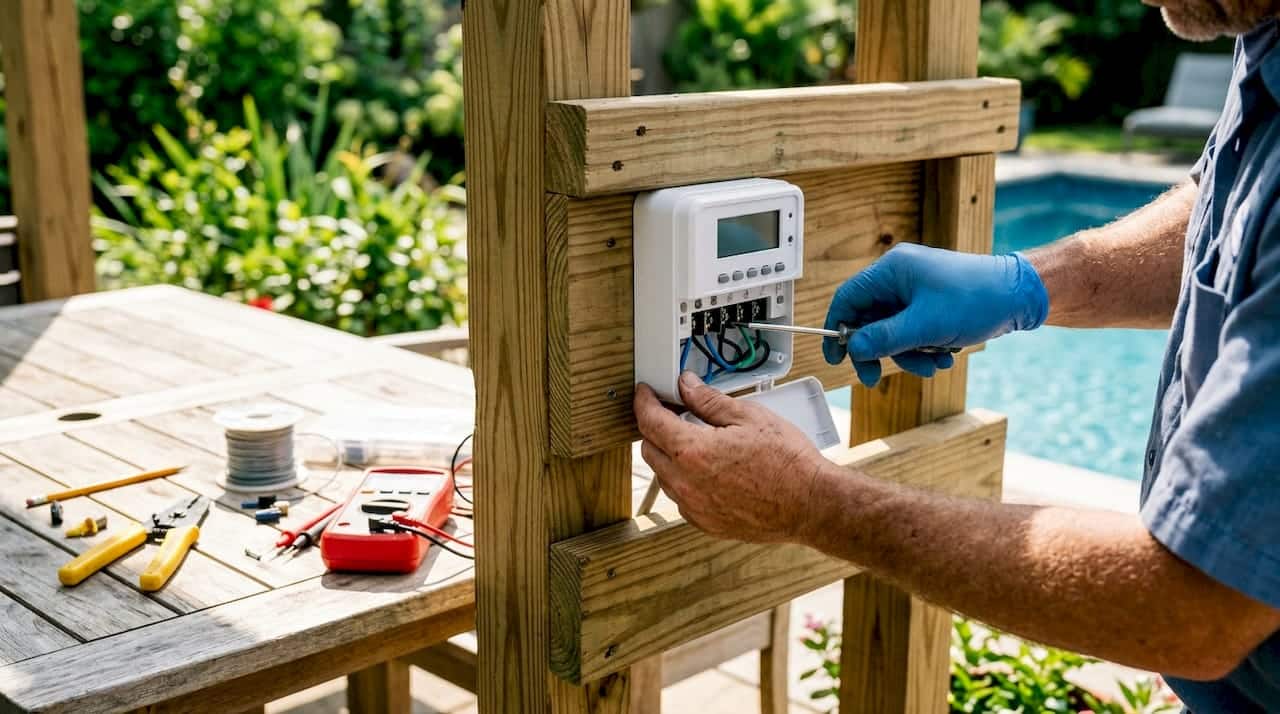
Pool timers function by sending power to your pump on a set schedule, then cutting it off when the cycle ends. The three main types each handle this differently, and choosing the wrong one for your setup creates problems that cost more than the timer itself.
Mechanical timers use physical plastic tabs called trippers that you clip onto a rotating dial. When a tripper reaches the “on” position, the circuit closes and the pump starts. One key advantage: mechanical timers retain their schedule through power outages without a battery backup, because the trippers are physical. They cost $50–$80 and last 10–15 years, though you should inspect the trippers annually for corrosion that can cause the pump to run continuously.
Digital timers replace the dial with a programmable display. You can set multiple on/off events per day, which is useful if you want the pump to run in two shorter blocks rather than one long stretch. Many digital models include freeze protection, a feature that overrides your schedule and runs the pump automatically when temperatures drop to around 34–36°F to prevent pipe damage.
Smart timers connect to your home Wi-Fi and let you adjust schedules remotely through a smartphone app. They also track energy use in real time, so you can see exactly what the pump costs to run each month.
- Mechanical timers: best for simple, budget-conscious setups
- Digital timers: best for homeowners who want multiple daily cycles or freeze protection
- Smart timers: best for full remote control and energy monitoring
Variable-speed pumps (VSPs) are a special case. VSPs use onboard digital scheduling and do not need an external timer. Cutting power to a VSP with an external timer disrupts its internal logic and can cause errors. If you have a VSP, program the schedule directly on the pump’s control panel.
Pro Tip: Never wire a heater to run without the pump. The pump must be active whenever the heater fires. Running a heater without pump flow can destroy the heat exchanger in minutes.
What are the main benefits of using pool timers for homeowners?
The benefits of pool timers fall into four clear categories: lower electricity costs, better water quality, longer equipment life, and daily convenience.
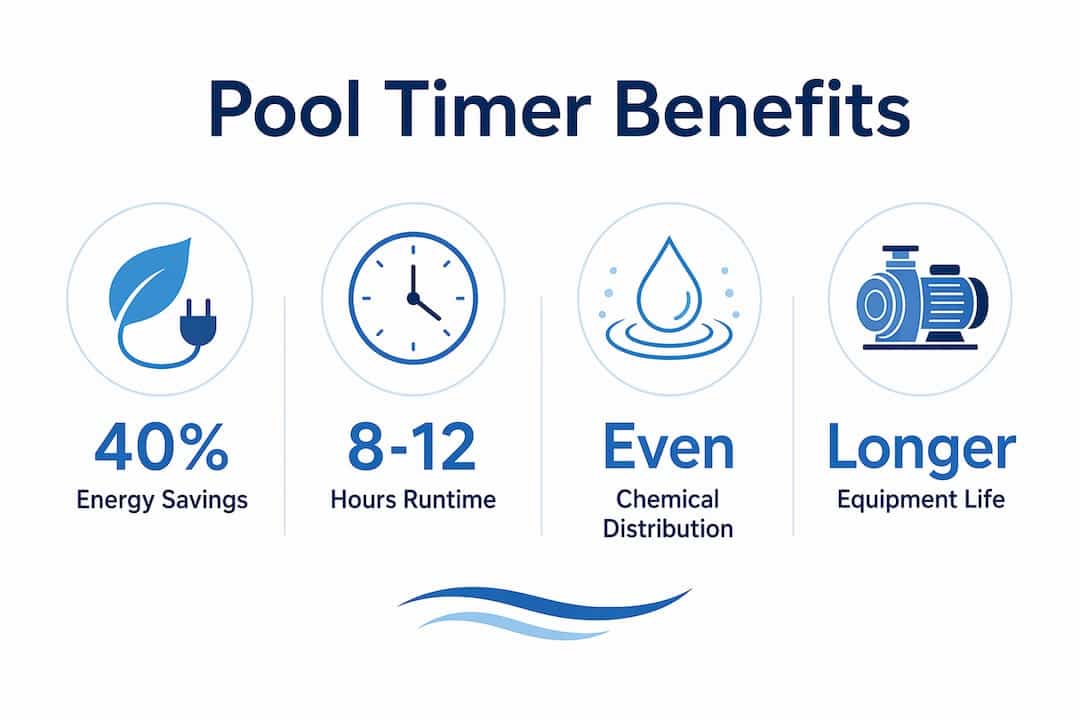
Electricity savings are the most immediate benefit. Limiting pump runtime to 8–12 hours daily can reduce electricity bills by 15% to 80%, depending on how much the pump was previously over-running. A properly programmed VSP takes savings further. VSP programming can cut electricity costs by $300 to $500 annually compared to a single-speed pump running without a timer.
Water quality improves because consistent circulation distributes chemicals evenly throughout the pool. Consistent filtration reduces shock treatments and lowers chemical expenses over time. That means fewer bags of shock, fewer algae problems, and less time spent troubleshooting cloudy water. For a deeper look at how circulation affects chemical balance, the Classicmarcite guide on optimizing pool water quality covers the full picture.
Equipment lifespan extends when the pump runs only as long as needed. Excessive pump runtimes accelerate wear and shorten equipment life by thousands of hours. A timer prevents the “more is better” mistake that pool technicians see constantly.
Convenience is straightforward. Once you program the timer, the pump runs on schedule every day without any action from you. That matters especially during vacation or busy weeks when manual operation would otherwise get skipped.
- Lower electricity bills through controlled runtime
- Fewer chemicals needed due to consistent water circulation
- Reduced mechanical wear on the pump motor and seals
- Automated daily operation with no manual switching required
How to choose and schedule your pool timer for best results
Selecting the right timer starts with knowing your pool’s turnover rate. The PHTA standard for turnover rate requires one full circulation of the pool’s total water volume per day. For a 20,000-gallon pool with a pump rated at 50 gallons per minute (GPM), that works out to roughly 6.7 hours of daily runtime. Larger pools or lower-flow pumps need more time.
Comparing timer types by feature and budget
| Timer type | Best for | Approximate cost | Key limitation |
|---|---|---|---|
| Mechanical | Simple schedules, budget setups | $50–$80 | Single on/off cycle per day |
| Digital | Multiple daily cycles, freeze protection | $80–$150 | Loses schedule without battery backup |
| Smart | Remote control, energy monitoring | $150–$300+ | Requires Wi-Fi and app setup |
Scheduling for maximum efficiency
Running the pump during peak daylight hours combats algae growth and evaporation more effectively than running it overnight. Sunlight accelerates algae and burns off chlorine, so having the pump circulate and filter during those hours keeps chemical levels stable. Running the pump overnight provides little benefit for water quality and wastes energy.
Adjust your schedule seasonally. In summer, Florida pools may need the full 8–12 hours because heat and sunlight degrade chlorine faster. In cooler months, 6–8 hours is often enough. If you host a pool party or have heavy use over a weekend, add an extra hour or two for a few days afterward to clear the added load on the water.
Timer programming that matches your environment and usage patterns delivers the best balance of cost savings without compromising water quality or equipment health. That means reviewing your schedule at least twice a year, not just setting it once and forgetting it.
Pro Tip: If your pool has a heater, use a timer or automation system that keeps the pump running for at least 10 minutes after the heater shuts off. This clears residual heat from the heat exchanger and prevents damage.
For a full breakdown of how proper scheduling connects to energy-efficient pool upgrades, Classicmarcite has detailed guidance on cutting utility costs through equipment choices and scheduling.
What are the advancements in smart pool timers and automation in 2026?
Smart timers and integrated automation systems have moved well past basic on/off scheduling. The gap between a $60 mechanical timer and a full automation system is now significant, and for homeowners with complex pool setups, the upgrade pays for itself quickly.
Wi-Fi-connected smart timers let you control pump speed, run time, and schedule from anywhere with a smartphone. Voice assistant integration with platforms like Amazon Alexa and Google Home is now standard on most mid-range smart timer models. Real-time energy monitoring shows you the cost of each pump cycle, which makes it easy to identify waste and adjust.
Integrated automation systems go further by coordinating every piece of pool equipment at once:
- Freeze protection: Automation systems monitor ambient temperature and activate the pump automatically at 34–36°F, regardless of the programmed schedule, to prevent plumbing damage.
- Heater synchronization: Integrated systems prevent heater-without-pump conflicts by ensuring the pump always runs when the heater fires.
- Lighting and cleaner control: Automation schedules pool lights to comply with local noise ordinances and runs robotic cleaners during off-peak hours.
- Chlorinator integration: Salt chlorine generators and chemical feeders run in sync with pump cycles, so chemicals only dose when water is circulating.
For vacation homes and rental properties, smart automation is especially valuable. A host’s guide to pool area management covers how remote timer control reduces the need for on-site visits between guests. The Classicmarcite resource on pool automation savings also details how automation cuts maintenance costs for residential pools.
Key Takeaways
A properly programmed pool timer is the single most cost-effective tool for reducing electricity costs, maintaining water quality, and extending equipment life.
| Point | Details |
|---|---|
| Timer type matters | Match mechanical, digital, or smart timers to your pool’s complexity and budget. |
| Schedule by turnover rate | Calculate daily runtime based on pool volume and pump GPM, not guesswork. |
| Run during daylight hours | Daytime pump operation fights algae and improves chemical efficiency. |
| Protect your heater | Always synchronize pump and heater operation to prevent heat exchanger damage. |
| Review schedules seasonally | Adjust runtime up in summer and down in cooler months to balance savings and water quality. |
What I’ve learned from watching homeowners get timers wrong
The most common mistake is setting the timer once during installation and never touching it again. Pool conditions change with the seasons, with bather load, and with equipment upgrades. A schedule that worked perfectly in april is often wrong by july in Florida, where heat and sun intensity spike dramatically. Homeowners who review their timer settings twice a year consistently spend less on chemicals and repairs than those who don’t.
The second mistake is running the pump longer than necessary because it “feels safer.” Excessive runtime increases energy costs and accelerates wear, shortening the pump’s life by thousands of hours. More runtime is not better water. Better scheduling is better water.
Smart timers solve both problems by making schedule adjustments easy and by showing you real data on energy use. But even a $60 mechanical timer beats no timer at all. The goal is controlled, consistent circulation, not maximum runtime.
One thing I’d add that most guides skip: your pool surface condition affects how hard the pump has to work. A rough or deteriorating surface traps algae and debris, forcing longer filtration cycles to achieve the same water clarity. A well-maintained or recently resurfaced pool works with your timer, not against it.
— Results
How a quality pool surface supports your timer’s efficiency
A pool timer controls when your pump runs. Your pool’s surface condition determines how effectively that runtime cleans the water. Rough, pitted, or aging surfaces trap algae, harbor bacteria, and demand longer filtration cycles to achieve the same clarity a smooth surface delivers in less time.

Classicmarcite has resurfaced over 100,000 pools across Florida since 1988, using materials like Pebble Tec® that resist algae and hold up against Florida’s heat and chemical demands. A fresh surface means your timer-controlled pump works at full efficiency from day one. If your pool surface is showing its age, professional pool resurfacing is the upgrade that makes every other maintenance effort more effective. Classicmarcite offers free estimates for homeowners across Central Florida and Jacksonville.
FAQ
What is the recommended daily runtime for a pool pump?
The Pool and Hot Tub Alliance (PHTA) sets the standard at 8–12 hours of daily pump runtime. The exact time depends on your pool’s volume and your pump’s flow rate.
Can a pool timer damage a variable-speed pump?
Yes. Variable-speed pumps use onboard scheduling and should not be controlled by an external timer. Cutting power externally disrupts the pump’s internal logic and can cause operational errors.
What time of day should I run my pool pump?
Run the pump during peak daylight hours. Daytime operation combats algae growth and improves chemical distribution. Running the pump overnight provides little water quality benefit.
How does a pool timer save money on chemicals?
Consistent filtration distributes chemicals evenly, which reduces the frequency of shock treatments and lowers overall chemical costs. Proper circulation means fewer algae blooms and less corrective dosing.
Do smart pool timers work with existing pool equipment?
Most smart timers are compatible with standard single-speed pumps and can integrate with heaters, lights, and chlorinators. Variable-speed pumps require their own onboard scheduling rather than an external smart timer.