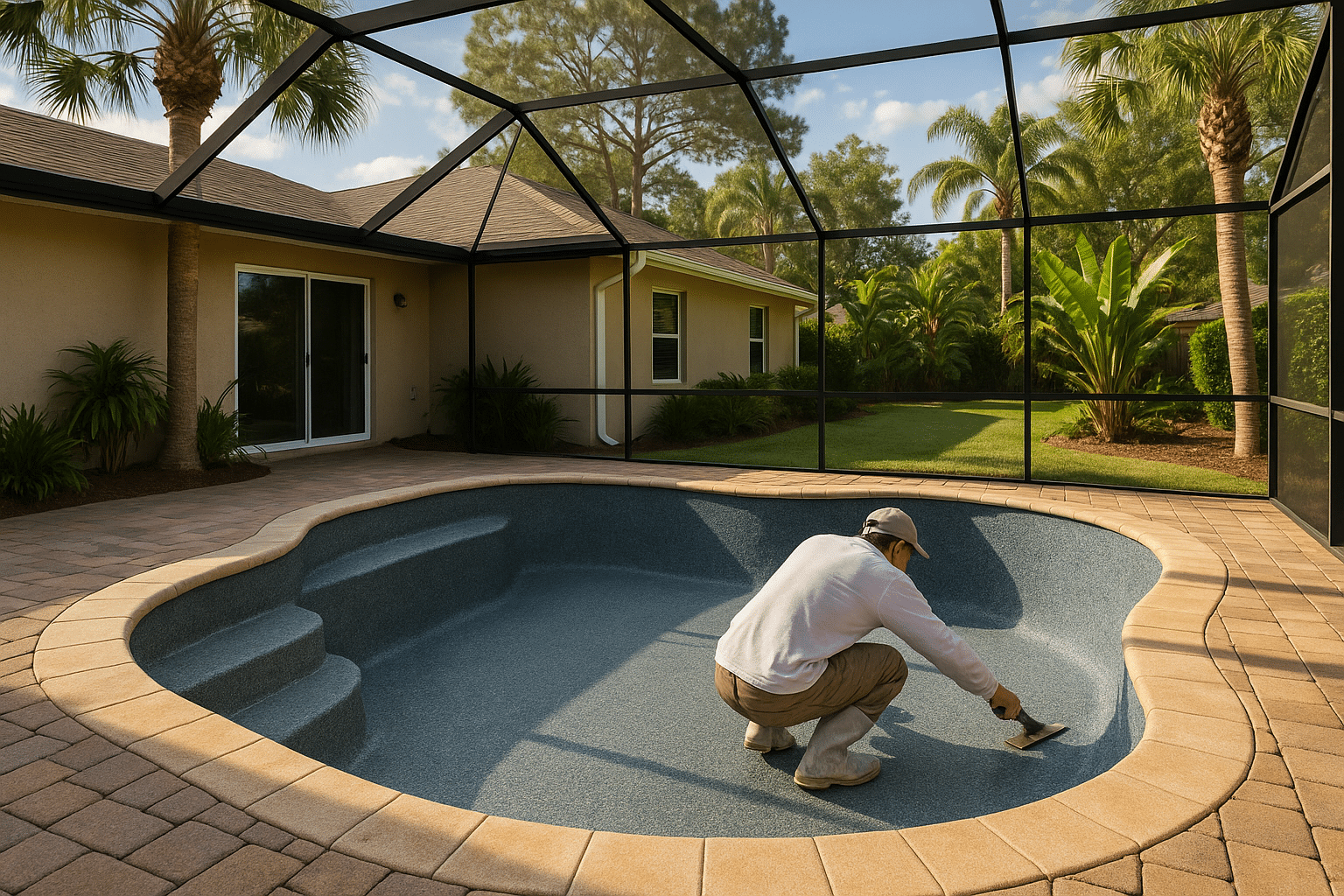
TL;DR: Most Florida pools need resurfacing every 7–20 years depending on the finish type, water chemistry, and how heavily the pool is used. Florida’s intense UV exposure, heat, and year-round swim season put more stress on surfaces than nearly any other climate in the country. Catching the warning signs early — and choosing a durable finish — is the best way to extend the interval and protect your investment.
Florida is one of the best places in the world to own a pool. It is also one of the hardest places on a pool surface. If you have been wondering how often you need to resurface a pool here in Central Florida or Northeast Florida, the honest answer is: it depends — but there are clear patterns you can plan around.
This guide breaks down the realistic timelines by finish type, explains why Florida accelerates surface wear, and tells you exactly what to watch for so you never wait too long.
The Short Answer: Resurfacing Timelines by Finish Type
The single biggest variable in how often you resurface is the finish material inside your pool. Here is what the data shows across finish types:
- Marcite (white plaster): Traditional white plaster is the most vulnerable to Florida’s harsh conditions. It can start showing wear in as little as five to seven years, especially with high UV exposure, heavy use, and inconsistent water chemistry. Plaster is the most common pool surface due to its affordability, but it is prone to wear from pool chemicals and heavy use. Well-maintained plaster pools may last closer to 12 years, while poorly maintained ones may need resurfacing in as little as 7 years.
- Quartz / pebble-quartz finishes: Quartz or pebble finishes can last 15 to 25 years compared to plaster. Quartz-based interiors may last up to 10 years with good care. Enhanced quartz blends push further, especially when paired with consistent water balance.
- Pebble Tec®, Pebble Sheen®, and Pebble Fina®: PebbleTec finishes offer a significantly longer lifespan — 20+ years with proper pool chemistry and maintenance — and are resistant to staining, fading, mottling, and erosion. Pebble finishes such as Pebble Tec or Pebble Sheen are more durable than plaster and resistant to chemical damage, and with proper care they can last up to 20 years.
As a practical rule, in Florida, most pool surfaces begin to degrade between 7 and 15 years. Where your pool falls in that range comes down to finish choice, maintenance quality, and the factors covered below.
Why Florida Is Harder on Pool Surfaces Than Almost Anywhere Else
Pool surfaces in Ohio or Colorado get a winter break. Yours does not.
Year-Round UV and Heat
Year-round UV exposure means pool surfaces never get a break. Unlike colder climates, where pools are covered and unused for months, Florida pools soak up the sun every single day. That constant exposure breaks down surface materials and contributes to fading, oxidation, and surface porosity over time.
Orlando’s intense UV index and 90-degree summer days put significantly more stress on pool surfaces than cooler climates do. The sun bleaches colored finishes over time, and the heat causes water to evaporate quickly, which concentrates minerals and chemicals that can scale or stain the surface.
Afternoon Storms and Acidic Rainwater
Florida’s afternoon thunderstorms are another major factor. Heavy downpours dump acidic rainwater and organic debris into your pool, which messes with your water chemistry instantly. If you do not adjust your chemicals after a storm, that acidic water starts attacking the plaster finish.
Hydrostatic Pressure from the Water Table
Central Florida also deals with a high water table. This creates hydrostatic pressure — water pressure from the ground pushing up against the bottom of your pool shell. If your surface is compromised, this pressure can cause the finish to pop off or delaminate, leading to hollow spots.
Humidity and Algae Risk
Constant UV rays cause faster wear and fading on pool surfaces, and Florida’s humid climate can affect surface durability, especially if water chemistry is not properly balanced. A porous, worn surface gives algae a foothold that even aggressive chemical treatment cannot fully clear.
The Four Factors That Determine Your Specific Timeline
1. Finish Material
Your pool’s surface finish directly impacts how often resurfacing is needed. Plaster is affordable but wears faster, while pebble finishes last longer and handle Florida’s climate better. Upgrading to a premium aggregate finish at resurfacing time is one of the smartest ways to extend your next cycle. See our comparison of Pebble Tec® vs. Marcite to understand the full trade-offs.
2. Water Chemistry
Water chemistry plays an important role in the life expectancy of a cementitious coating. A cementitious interior finish’s overall life expectancy can be severely reduced whenever water is allowed to be in an aggressive condition for extended periods. “Aggressive pool water” is water that is chemically outside of established balanced ranges — water capable of removing, dissolving, or otherwise reacting with components of the surface materials causing accelerated deterioration.
According to the National Plasterers Council, pool water pH, carbonate alkalinity, calcium hardness, and total dissolved solids should be frequently monitored — testing should take place one to two times a week for pH, total alkalinity, and free/total chlorine, and once a month for calcium hardness, stabilizer (cyanuric acid), and TDS.
Chlorine levels and pH balance directly impact how quickly surfaces wear down. High chlorine concentrations accelerate plaster erosion, and improper pH causes calcium buildup that damages pool finishes over time.
3. Usage and Bather Load
Pool usage significantly impacts the frequency of pool resurfacing. The more a pool is used, the quicker it will require resurfacing. Pools experiencing heavy use may need to be resurfaced in as little as three to seven years for cement and plaster surfaces, while less frequently used pools can go up to 15–20 years before needing resurfacing.
This is especially relevant for HOAs, apartment communities, hotels, and resorts, where bather loads are high every single day of the year.
4. Installation Quality
Poorly applied surfaces or low-quality materials may require earlier resurfacing. Pebble Tec® addresses this directly: with superior stone quality and consistency and industry-leading pigments, PebbleTec finishes maintain their beauty and structural integrity — and authorized installers offer a comprehensive warranty on workmanship to match the product warranty. Classic Marcite is one of the largest authorized Pebble Tec® applicators in Central Florida, which means your installation carries that dual product-plus-workmanship warranty.
Warning Signs You Should Not Ignore
Do not wait until you have a structural problem. Resurfacing is a structural and safety decision. Delaying it can lead to higher repair costs and long-term damage. Watch for these specific signals:
- Rough or scratchy texture — A smooth pool surface is crucial for comfort and safety. If the bottom feels rough or scratchy, it may be wearing down.
- Stains that won’t respond to treatment — When stains no longer respond to acid washing or chemical treatment, they’ve penetrated below the surface layer. Common Florida culprits include iron staining from well water, copper staining from corroded equipment, and organic staining from tannins.
- Chalky residue on hands — White, chalky residue on your hands after touching the pool walls indicates surface degradation.
- Cracks or chips — Small cracks can quickly become major leaks, leading to costly repairs if not addressed early.
- Persistent algae — A worn-out surface can develop pores and pits where algae thrive, making maintenance harder.
- Uncontrollable water chemistry — A deteriorating surface absorbs and releases minerals unpredictably, making water chemistry harder to maintain. If you’re constantly battling pH swings or calcium issues despite proper weekly pool service, the surface may be the culprit.
For a deeper look, see our guide to 7 Warning Signs Your Pool Needs Resurfacing.
A Practical Timeline Cheat Sheet for Florida Pool Owners
| Finish Type | Typical Florida Lifespan | Best For |
|---|---|---|
| Marcite / White Plaster | 5–12 years | Budget-conscious resurfacing |
| Quartz Aggregate | 10–15 years | Mid-range durability and aesthetics |
| Pebble Tec® / Pebble Sheen® / Pebble Fina® | 20+ years | Long-term value, luxury look |
| Beadcrete® | 15–20 years | Glass bead shimmer with aggregate durability |
Ranges assume proper water chemistry maintenance. Heavy commercial use or neglected chemistry can shorten any finish.
How to Get More Life Out of Your Current Surface
You cannot stop the clock, but you can slow it down significantly. Here is what actually makes a difference:
- Test water chemistry weekly. In Florida, where pools stay full and active year-round, surface exposure never gets a break. Aggressive water slowly dissolves surface materials, while scale-forming water leaves behind rough deposits that trap dirt and algae. Over time, these chemical reactions shorten the life of the finish and lead to costly resurfacing sooner than expected. Balanced chemistry minimizes these reactions and preserves the integrity of the pool structure.
- Rebalance after every heavy rain. Florida’s summer storms can dilute and acidify your pool water within hours. Adjust pH and alkalinity before the water sits overnight on your surface.
- Brush regularly. Properly balancing a pool’s pH levels, alkalinity, and calcium hardness is crucial in preventing the surface from deteriorating prematurely. Regular maintenance such as brushing and vacuuming helps keep the surface free from debris and algae growth, further extending its lifespan.
- Address small cracks immediately. Address cracks or stains immediately to avoid spreading damage.
- Upgrade your finish at resurfacing time. Every resurfacing is a chance to choose a longer-lasting material. Consider upgrading to a more durable finish during resurfacing — following best practices can extend your pool’s surface life beyond typical cycles.
What About Commercial Pools and HOAs?
If you manage a hotel, resort, apartment complex, or HOA pool, the calculus is different. Bather loads are higher, chemical demand is constant, and the consequences of a rough or deteriorating surface — guest injury, regulatory citations, liability — are significant.
The ANSI/APSP/ICC-11 American National Standard for Water Quality in Public Pools and Spas is the benchmark for the pool, hot tub and spa industry based on science, verifiable data, and best practices. Commercial pool operators in Florida are also governed by Florida Administrative Code Chapter 64E-9, which sets requirements for public pool surfaces, water quality, and inspection records.
For commercial properties, we generally recommend proactive inspection every three to five years and resurfacing on a planned schedule — before surface failure forces an emergency closure.
Ready to Know Where Your Pool Stands?
Classic Marcite has resurfaced more than 100,000 pools across Central and Northeast Florida since 1988. Our crews are direct employees — not subcontractors — which means the same quality standard on every job, whether it is a backyard pool in Orlando or a resort property in Jacksonville.
We offer free estimates with transparent, no-surprise pricing. If you want to know what finish makes sense for your pool’s age and condition, or what a resurfacing project would actually cost, see our 2026 Central Florida pricing guide or contact us directly for a free on-site estimate.
Recommended Reads
- How Much Does Pool Resurfacing Cost in Central Florida? (2026 Pricing Guide)
- How Long Does Pool Resurfacing Take? A Step-by-Step Timeline
- Pebble Tec vs. Marcite: Which Pool Finish Is Right for Your Florida Pool?