TL;DR: Plaster is the most affordable pool finish but typically lasts only 7–10 years in Florida’s climate before roughness and staining set in. Quartz blends crushed silica crystals into the plaster mix for a harder, more stain-resistant surface that lasts 12–15 years and holds color far better. If you plan to stay in your home long-term, quartz’s higher upfront cost almost always pays off over two resurfacing cycles.
If your pool finish is fading, chalking, or rough underfoot, you are likely weighing two of the most popular resurfacing materials: standard plaster (marcite) and quartz aggregate. Both are cementitious finishes — meaning they bond directly to your concrete or gunite shell — but they perform very differently once the water goes back in.
This guide covers exactly what each finish is made of, how it holds up in Central Florida’s heat and UV, what you should expect to pay, and which option makes sense for your situation.
What Is Pool Plaster?
Plaster is a cement-based coat troweled smooth over the shell, and it has been the default pool finish for generations. While plaster — a mix of white cement and crushed marble — has been the industry standard for decades, it is the most susceptible to wear and tear due to its porous nature.
White plaster reflects light for that bright, light-blue water everyone pictures; colored plaster uses tinted cement for deeper blues, grays, and greens. It is the most affordable finish and feels smooth underfoot when new.
What Is a Quartz Pool Finish?
Quartz finishes use the same plaster base and blend in quartz aggregate — fine silica crystals that are significantly harder and more chemically resistant than the marble dust in standard plaster.
Quartz finishes also come in a wider range of colors than standard white plaster. Manufacturers blend quartz crystals with pigment to produce finishes ranging from soft gray-blues to warm sand tones. The color is embedded in the aggregate, not painted on, so it does not fade the way surface coatings can.
The light-reflecting quartz crystals create spectacular visual effects, particularly in sunlight — a sparkle and shimmer that gives pools a distinctly more luxurious appearance.
Industry Standards That Cover Both Finishes
Both plaster and quartz are regulated under the same national standard. The Pool and Hot Tub Alliance (PHTA), the International Code Council (ICC), and the National Plasterers Council (NPC) published the ANSI/APSP/ICC/NPC-12 2025 American National Standard for the Plastering of Swimming Pools and Spas, which addresses the cementitious interior finish of pools, spas, and other aquatic facilities, both public and residential. You can review that standard directly on the PHTA website.
Quartz finishes degrade more slowly under aggressive chemistry because silica is less soluble in mildly acidic water than calcium carbonate. However, the cement binder in quartz finishes remains susceptible to acid attack, meaning extreme pH excursions below 6.8 still cause damage.
How Each Finish Performs in Florida
Climate matters enormously here. Florida’s intense climate cuts pool surface lifespan by 20–30% compared to northern states. The state’s year-round swimming season, brutal UV exposure, and mineral-heavy water all conspire to wear down pool surfaces faster than you would see elsewhere.
In Florida’s humid, high-UV conditions, plaster typically lasts 7–10 years with proper water chemistry, while quartz finishes extend the life to 10–15 years and offer better stain resistance.
Regional variations significantly impact plaster lifespan: hot, sunny climates accelerate deterioration, while cooler climates with less UV exposure may extend service life toward the upper end of the range.
Lifespan Comparison
- Standard plaster (marcite): Most Florida pool owners can expect plaster to last 7–10 years before roughness and staining become a problem.
- Quartz aggregate: Quartz finishes typically last 10 to 15 years with proper maintenance.
- Pebble aggregate (Pebble Tec®, Pebble Sheen®, etc.): Premium pebble surfaces in Florida last 20–25 years — the longest lifespan of any cementitious finish.
It is also worth distinguishing structural life from appearance life. Lifespan and appearance lifespan are two different things. A plaster surface might remain structurally sound beyond seven years but still look rough, stained, or simply dated. For homeowners who care about the look and feel of their pool, the decision to resurface often comes before the surface technically fails.
Stain Resistance and Maintenance
Plaster’s porosity is its biggest long-term weakness. Metals like iron and copper, organic debris, and algae find purchase in the surface far more easily than they would on a denser finish. If you have ever scrubbed at a persistent brown or purple ring on old plaster that would not respond to chemicals, you have seen this mechanism at work — the stain is living inside the surface, not just sitting on top of it.
Quartz is essentially plaster fortified with small, colored quartz aggregates. These crystals are much harder than the marble aggregate used in traditional plaster, which makes the surface significantly more durable and less prone to etching and stains caused by water chemistry imbalances.
The actual lifespan of your plaster depends heavily on the chemical balance of your water. If the pH or calcium hardness levels are consistently imbalanced, the plaster can become pitted, etched, or stained much sooner than the 12-year mark.
Cost Comparison
Expect to pay more for quartz upfront, but the math often favors it over two resurfacing cycles.
- Standard plaster: Standard white plaster, also known as marcite, typically costs around $6–$8 per square foot.
- Quartz aggregate: Quartz plaster increases the cost to about $7–$10 per square foot.
- Pebble finishes (Pebble Tec®, Pebble Sheen®, etc.): Aggregate plaster ranges from $6–$15 per square foot, depending on the aggregate type.
While quartz finishes are generally 15–30% more expensive than basic plaster, the added longevity and reduced need for maintenance usually offset the initial cost quickly. If you replaster with standard marcite every 8 years versus resurfacing with quartz every 13 years, the difference in total spend over a 25-year ownership period can be significant — especially when you factor in labor costs each time.
If you are planning to sell the house in five years, white plaster is a perfectly rational choice. If you are staying put, do the math on total cost over 20 years.
Pros and Cons at a Glance
Standard Plaster (Marcite)
- ✅ Lowest upfront cost
- ✅ Classic bright-white water appearance
- ✅ Smooth underfoot when new
- ✅ Well-understood installation process
- ❌ Shortest lifespan (7–10 years in Florida)
- ❌ Most porous — stains and etches more readily
- ❌ Color fading often noticeable by years 5–7
- ❌ Requires the strictest water chemistry maintenance
Quartz Aggregate Finish
- ✅ 12–15 year lifespan in Florida conditions
- ✅ Significantly harder and less porous than plaster
- ✅ Color embedded in aggregate — resists UV fading
- ✅ Wide color palette with natural sparkle
- ✅ Smoother feel than pebble finishes
- ❌ Higher upfront cost than standard plaster
- ❌ Still requires consistent water chemistry maintenance
- ❌ Shorter lifespan than premium pebble aggregates
Who Should Choose Each Finish?
Choose standard plaster if: your budget is tight right now, you are preparing to sell the home and just need the pool to look fresh, or the pool will see limited use (a vacation property, for example).
Choose quartz if: you plan to stay in the home for 10 or more years, you want better stain resistance without moving all the way to a pebble finish, or you want more color options and a sparkling appearance that holds up in the Florida sun.
Consider pebble finishes (Pebble Tec®, Pebble Sheen®, Pebble Fina®) if: maximum longevity is your goal, you own a commercial property, HOA amenity pool, or resort facility where frequent resurfacing is highly disruptive, or you want the most stain-resistant and maintenance-friendly surface available. Learn more in our comparison guide: Pebble Tec® vs. Marcite: Which Pool Finish Is Right for Your Florida Pool?
Warning Signs You Need to Resurface Now
Whichever finish your pool currently has, after about 10 years, a pool with a plaster finish may start to show signs it is time to have the surface redone — including mineral stains, worn spots where the concrete or gunite shows through, and roughness on the surface that makes it uncomfortable to walk or sit on.
If you are noticing any of those symptoms, check out our full list of 7 Warning Signs Your Pool Needs Resurfacing before deciding whether a repair or a full resurface is the right call.
Why Florida Pools Age Faster Than You Expect
Pool resurfacing frequency varies based on finish type, with plaster requiring attention every 7–10 years while aggregate surfaces last 10–20 years. Florida’s intense UV exposure and acidic rainfall can shorten these timelines significantly, making material selection your first line of defense.
Florida pools also run year-round. A pool in Minnesota sits dormant for five or six months each year; a pool in Orlando does not. That continuous exposure to water, chemicals, and sunlight adds up — and it is a key reason why upgrading from plaster to quartz (or to a pebble finish) pays off faster here than it would in a cooler climate.
Getting It Done Right in Central Florida
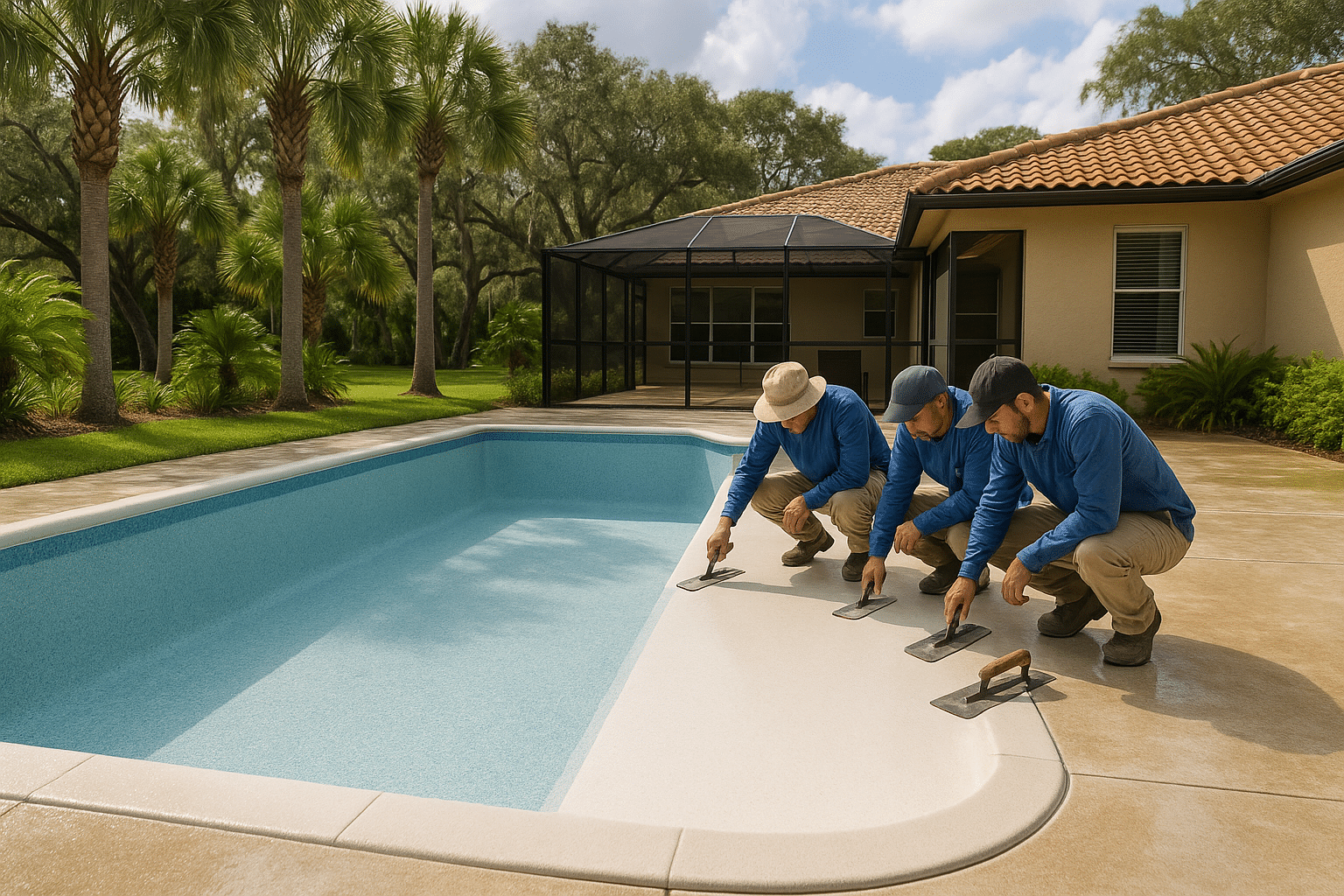
The finish you choose is only as good as the crew applying it. Quartz finishes in particular require precise mixing ratios and controlled troweling technique; cutting corners during application shortens the lifespan of even the best materials.
At Classic Marcite, every crew member is a direct employee — not a subcontractor — which is how we maintain consistent quality across more than 1,000 projects a year. We have resurfaced more than 100,000 pools since 1988 and are the largest Pebble Tec® applicator in Central Florida, with installations in both the Orlando metro and Jacksonville areas. We offer free, no-pressure estimates and transparent pricing so you can compare your options without any guesswork.
Not sure if you need a basic replaster or a full renovation? See our step-by-step breakdown: How Long Does Pool Resurfacing Take? A Step-by-Step Timeline.
Recommended Reads
- Pebble Tec vs. Marcite: Which Pool Finish Is Right for Your Florida Pool?
- Pebble Sheen vs. Pebble Fina vs. Pebble Tec: Choosing the Best Finish for Your Pool
- What Is Beadcrete? A Complete Guide to This Unique Pool Finish