Finding a reliable pool contractor in Orlando or Jacksonville can feel complex with Florida’s strict certification laws shaping every step of the process. For property managers seeking durable and visually appealing pools, state-mandated pool contractor certifications ensure your chosen professional is qualified and compliant with the Florida Building Code. This guide clarifies certification types and requirements so you can make confident, informed choices about resurfacing and maintaining your pool.
Table of Contents
- Defining Pool Contractor Certifications in Florida
- Types of Pool Contractor Certifications Available
- Licensing Requirements and Legal Framework
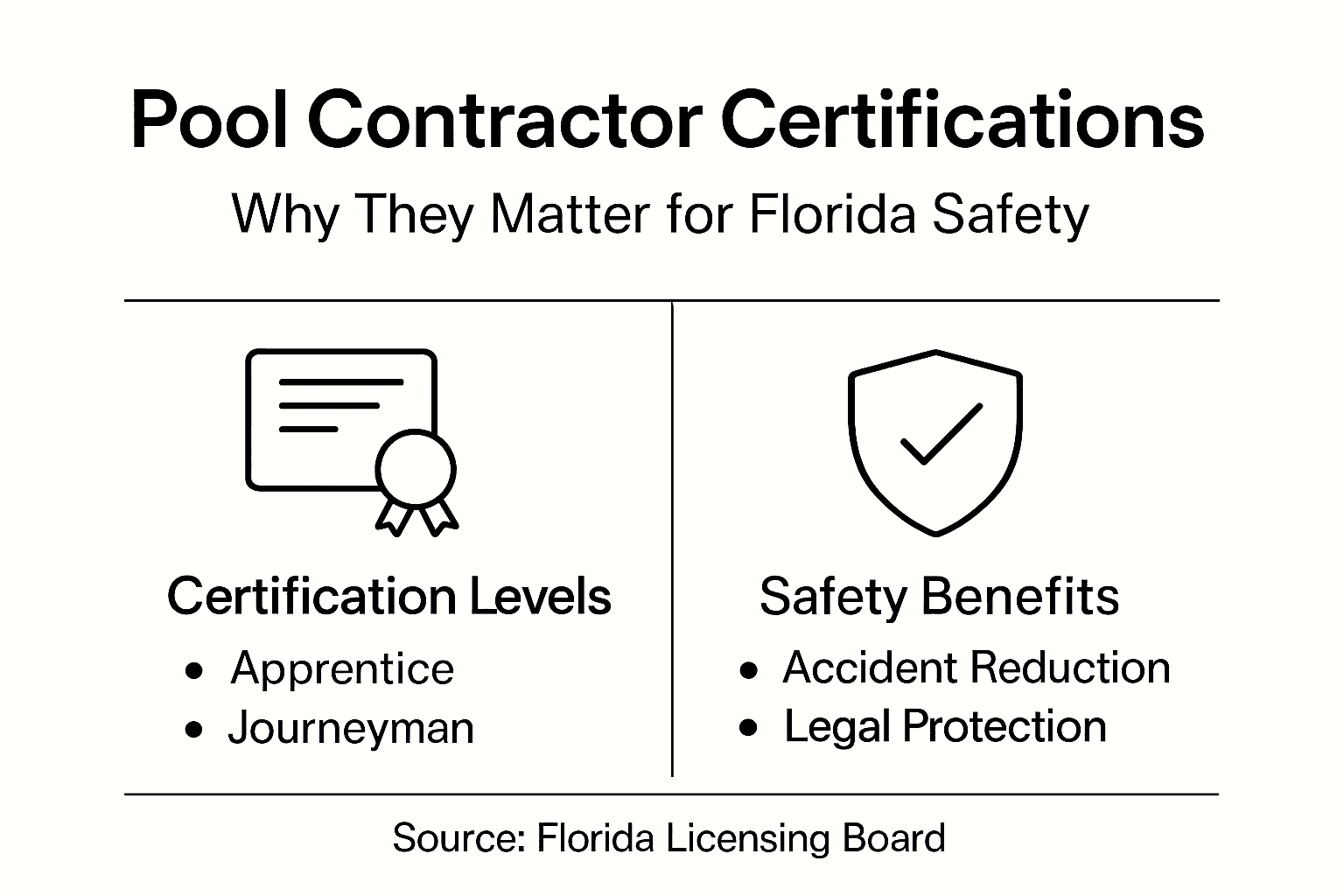
- Why Certifications Matter for Safety and Quality
- Risks of Uncertified Contractors and Compliance Issues
- Common Pitfalls When Hiring Pool Contractors
Key Takeaways
| Point | Details |
|---|---|
| Importance of Certification | Pool contractor certifications in Florida ensure professional competence and public safety in pool construction and maintenance. |
| Regulatory Requirements | Contractors must meet strict licensing requirements, including experience, examinations, and ongoing education. |
| Risks of Uncertified Contractors | Hiring uncertified contractors can expose property owners to financial and legal vulnerabilities, including potential insurance voiding. |
| Due Diligence | Property owners should verify contractor licensing, insurance, and professional references before starting any pool project. |
Defining Pool Contractor Certifications in Florida
Pool contractor certifications in Florida represent a rigorous regulatory framework designed to ensure professional competence and public safety in swimming pool construction and maintenance. These certifications are not merely optional credentials but mandatory qualifications that protect homeowners and commercial property managers from substandard work and potential safety hazards.
Under Florida’s regulatory structure, pool contractors must navigate a comprehensive certification process defined by state statutes. This process involves multiple critical components:
- Demonstrating minimum professional experience in pool construction
- Passing state-mandated licensing examinations
- Proving comprehensive knowledge of the Florida Building Code
- Maintaining current insurance and bonding requirements
- Completing continuing education courses
The Florida Building Code provides extensive guidelines that pool contractors must master. These regulations cover crucial aspects of pool construction, including:
- Electrical safety standards
- Mechanical system requirements
- Material approval protocols
- Structural integrity specifications
- Safety barrier and enclosure regulations
Professional Certification Levels typically include:
- Journeyman Pool Contractor
- Master Pool Contractor
- Intermediate Pool Contractor
Each level requires progressively advanced demonstration of technical expertise and professional competence. Contractors must document their experience, pass rigorous examinations, and maintain ongoing educational requirements to retain their credentials.
Pro tip: Always verify a pool contractor’s current state certification status through the Florida Construction Industry Licensing Board before beginning any pool project.
Types of Pool Contractor Certifications Available
In Florida, pool contractor certifications represent a sophisticated tiered system designed to ensure professional competence and safety across various pool construction and maintenance domains. Contractor classifications range from local to statewide credentials that address different levels of professional expertise and project complexity.
The primary certification types for pool contractors in Florida include:
Here’s a quick comparison of Florida pool contractor license types and their typical project scopes:
| License Type | Typical Projects | Geographic Validity |
|---|---|---|
| General Contractor License | Large commercial pool builds | Statewide |
| Residential Contractor License | Residential pool installations | Statewide |
| Specialty Contractor License | Specific pool repair or upgrades | Statewide/Local |
| Certified Statewide License | All pool construction types | Statewide |
| Local Jurisdiction License | Limited to certain pool work | Specific local area |
- General Contractor License: Allows comprehensive pool construction projects
- Residential Contractor License: Focused on residential pool installations
- Specialty Contractor License: Targeted for specific pool-related services
- Certified Statewide License: Valid across all Florida jurisdictions
- Local Jurisdiction License: Limited to specific county or municipal areas
Certification Levels are typically structured to reflect increasing professional competence:
- Apprentice Pool Contractor
- Journeyman Pool Contractor
- Master Pool Contractor
Each certification level requires progressively sophisticated demonstrations of technical knowledge, practical experience, and professional accountability. Contractors must pass rigorous examinations, document substantial work experience, and maintain ongoing educational requirements to advance through these professional tiers.
Important regulatory changes are phasing out local licensing by 2025, standardizing pool contractor qualifications across Florida.
The comprehensive licensing framework ensures that pool contractors possess the necessary skills, knowledge, and credentials to execute safe, high-quality pool construction and maintenance projects. Homeowners and property managers can confidently select contractors knowing they meet stringent state-mandated professional standards.
Pro tip: Always request and independently verify a contractor’s current state license number before initiating any pool-related project.
Licensing Requirements and Legal Framework
The legal framework for pool contractor licensing in Florida is comprehensive and strictly enforced by the Department of Business and Professional Regulation, ensuring only qualified professionals can perform pool-related construction and maintenance work. This regulatory system protects consumers by establishing rigorous standards for professional competence, financial responsibility, and technical expertise.
Key licensing requirements for pool contractors in Florida include:
- Minimum age of 18 years
- Passing state-mandated comprehensive examinations
- Providing proof of relevant work experience
- Demonstrating financial stability
- Maintaining current liability insurance
- Submitting to background checks
- Completing mandatory continuing education courses
Financial Requirements for obtaining and maintaining a pool contractor license involve several critical components:
- Minimum net worth documentation
- Proof of general liability insurance
- Worker’s compensation coverage
- Surety bond submission
- Ongoing financial responsibility verification
Florida Statute Chapter 489 mandates strict compliance with licensing regulations to protect public safety and ensure professional standards.
The licensing process requires contractors to demonstrate not just technical knowledge, but also professional accountability. Renewal of licenses depends on continuous education, maintaining clean professional records, and staying current with evolving building codes and safety regulations.

Pro tip: Request and independently verify a contractor’s license number through the official Florida licensing database before signing any pool construction or renovation contract.
Why Certifications Matter for Safety and Quality
Pool contractor certifications are critical safeguards that protect homeowners and property managers from potential risks associated with substandard pool construction and maintenance. Licensing regulations ensure contractors meet rigorous safety standards, significantly reducing the likelihood of structural failures, accidents, and costly repairs.
The key safety benefits of certified pool contractors include:
- Comprehensive understanding of Florida building codes
- Advanced technical knowledge and skills
- Proven track record of professional experience
- Mandatory ongoing training and education
- Adherence to strict safety protocols
- Financial accountability and insurance protections
- Ability to obtain necessary permits and approvals
Risk Mitigation Factors demonstrate the critical importance of certification:
- Reduced potential for structural defects
- Enhanced compliance with safety regulations
- Professional liability coverage
- Higher quality workmanship
- Minimized legal and financial vulnerabilities
Certified contractors represent a critical line of defense against substandard pool construction practices that could compromise public safety.
Beyond immediate safety considerations, certified pool contractors provide long-term value by ensuring pool installations and renovations meet the highest professional standards. Their expertise translates into more durable, efficient, and reliable pool systems that protect both property investments and user safety.
Pro tip: Always verify a contractor’s current certification status and insurance coverage before beginning any pool-related project.
Risks of Uncertified Contractors and Compliance Issues
Hiring uncertified pool contractors exposes property owners to substantial financial and legal risks that can far exceed potential cost savings. Unlicensed contractors create significant legal vulnerabilities that can compromise property safety, insurance coverage, and potential legal recourse in case of construction failures.
Critical risks associated with uncertified contractors include:
- Potential voiding of homeowner’s insurance policies
- Lack of professional liability protection
- Non-compliance with local building codes
- Increased likelihood of substandard workmanship
- Legal inability to enforce contract terms
- Higher probability of construction defects
- Potential criminal penalties for contractors
Financial and Legal Vulnerabilities encompass multiple dimensions:
- Uninsured property damage risks
- Personal liability for workplace injuries
- Potential legal disputes
- Expensive remediation of faulty work
- Difficulty obtaining permits and approvals
Uncertified contractors represent a significant threat to property owners’ financial and legal protections.
Beyond immediate construction concerns, uncertified contractors create long-term complications that can dramatically increase overall project costs. Property owners may find themselves responsible for repairs, code violations, and potential legal challenges stemming from non-compliant pool installations.
The table below summarizes the impact of hiring certified vs. uncertified pool contractors:
| Contractor Type | Safety Risks | Quality Assurance | Legal Protections |
|---|---|---|---|
| Certified Contractor | Low risk | High, meets codes | Full insurance and recourse |
| Uncertified Contractor | High risk | Often substandard | Limited or no protections |
Pro tip: Request and independently verify a contractor’s licensing credentials through official Florida state databases before initiating any pool construction project.
Common Pitfalls When Hiring Pool Contractors
Navigating the complex landscape of pool contractor selection requires careful attention to detail and thorough verification of professional credentials. Contractor licensing pitfalls can create significant risks for unsuspecting property owners, making comprehensive due diligence essential before initiating any pool project.
Key pitfalls to avoid when hiring pool contractors include:
- Failing to verify current license status
- Overlooking insurance and bonding requirements
- Neglecting to check contractor’s professional references
- Ignoring specialized license classifications
- Skipping background checks on past work performance
- Not confirming compliance with Florida Building Codes
- Accepting verbal estimates without written documentation
Critical Warning Signs that should prompt immediate reconsideration:
- Reluctance to provide licensing information
- Unusually low project estimates
- Lack of clear communication
- Absence of professional certifications
- Limited or nonexistent online presence
Professional contractors welcome scrutiny and transparent communication about their credentials.
Beyond basic license verification, property owners must understand the nuanced requirements of pool contractor certifications. This includes recognizing different license classifications, understanding local jurisdiction regulations, and comprehending the specific expertise required for complex pool construction and renovation projects.
Pro tip: Request a comprehensive documentation package from potential contractors, including current license, insurance certificates, and professional references.
Ensure Your Florida Pool Meets Safety and Quality Standards with Expert Resurfacing
Navigating the complex requirements of Florida’s pool contractor certifications highlights the importance of working with certified professionals who understand safety protocols and building codes inside and out. Protect your investment and your family by choosing pool renovation experts who prioritize compliance, quality, and durability. At Classic Marcite, we specialize in revitalizing pool surfaces with premium materials like Pebble Tec® to deliver not only stunning aesthetics but also enhanced structural integrity that meets Florida’s rigorous standards.

Don’t risk costly repairs or safety issues by hiring uncertified contractors. Take the next step toward a safer, more beautiful pool by requesting a free estimate with Classic Marcite. Explore our proven track record in residential and commercial pool resurfacing, remodeling, and repairs to experience the peace of mind that comes from working with trusted industry leaders. Visit our website to learn how we transform pools across Florida with craftsmanship that exceeds licensing requirements and keeps you protected.
Frequently Asked Questions
What are the certification levels for pool contractors in Florida?
The certification levels for pool contractors in Florida include Apprentice Pool Contractor, Journeyman Pool Contractor, and Master Pool Contractor. Each level requires progressively advanced demonstrations of technical knowledge, experience, and ongoing education.
Why is it important to hire a certified pool contractor?
Hiring a certified pool contractor ensures adherence to safety regulations, mastery of local building codes, and ongoing education, which collectively enhance construction quality and mitigate risks associated with substandard work.
What risks do unlicensed pool contractors pose?
Unlicensed pool contractors pose significant risks, including potential voiding of homeowner’s insurance, lack of professional liability protection, and compliance issues with local building codes, leading to substandard workmanship and legal vulnerabilities.
How can I verify a pool contractor’s certification status?
You can verify a pool contractor’s certification status by checking the official Florida Construction Industry Licensing Board database, which provides current licensing information and ensures the contractor meets all necessary qualifications.
Recommended
- Why Hire Licensed Pool Contractors In Florida
- Role Of Resurfacing In Pool Safety: Florida Insights
- How To Select Pool Contractor For Quality Resurfacing
- 7 Smart Commercial Pool Upgrade Ideas For Florida Owners
- 7 Smart Tips for Choosing an Outdoor Mat for Pool Areas – Mats4U USA
- Pool Refinishing Windermere FL
- Pool Renovation Winter Park FL
- Swimming Pool Remodeling The Villages FL