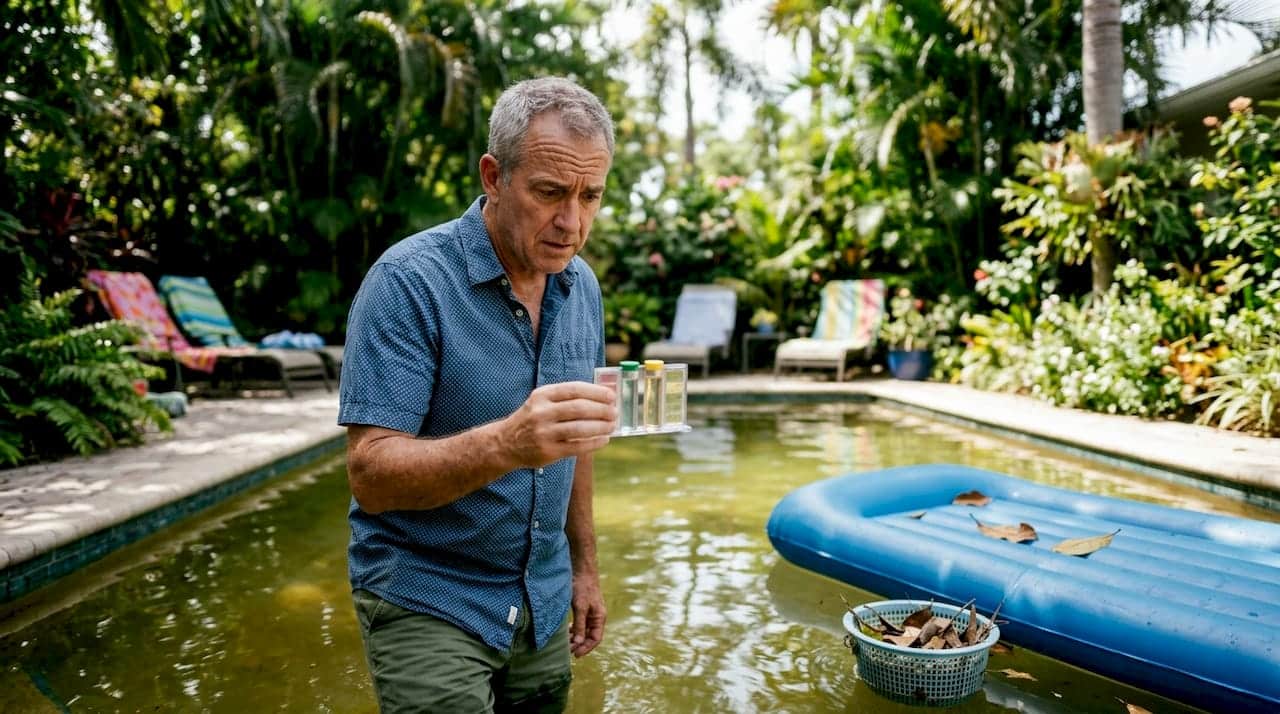
TL;DR:
- Pool discoloration occurs from organic debris, dissolved metals, or mineral buildup, each requiring specific diagnosis and treatment. Proper testing with chlorine tablets and vitamin C confirms stain types, preventing costly mistakes like premature shock or improper chemical use. Consistent water chemistry management and proactive maintenance help prevent staining and surface deterioration over time.
Pool discoloration is the visible staining of pool surfaces caused by organic debris, dissolved metals, or mineral deposits from unbalanced water chemistry. Understanding what causes pool discoloration separates a quick fix from a costly mistake. The three main categories are organic stains, metal stains, and mineral scale, and each one demands a completely different treatment approach. Misidentifying the stain type and reaching for chlorine shock first is the single most common error pool owners make. Get the diagnosis right, and the fix becomes straightforward.
What causes pool discoloration from organic sources?
Organic stains are the most common form of pool surface discoloration. They come from natural debris that sits on or near the pool surface long enough to leave a mark. Leaves, berry debris, and algae remnants are the usual culprits, especially when chlorine levels drop and the sanitizer fails to break down the material before it bonds to the surface.
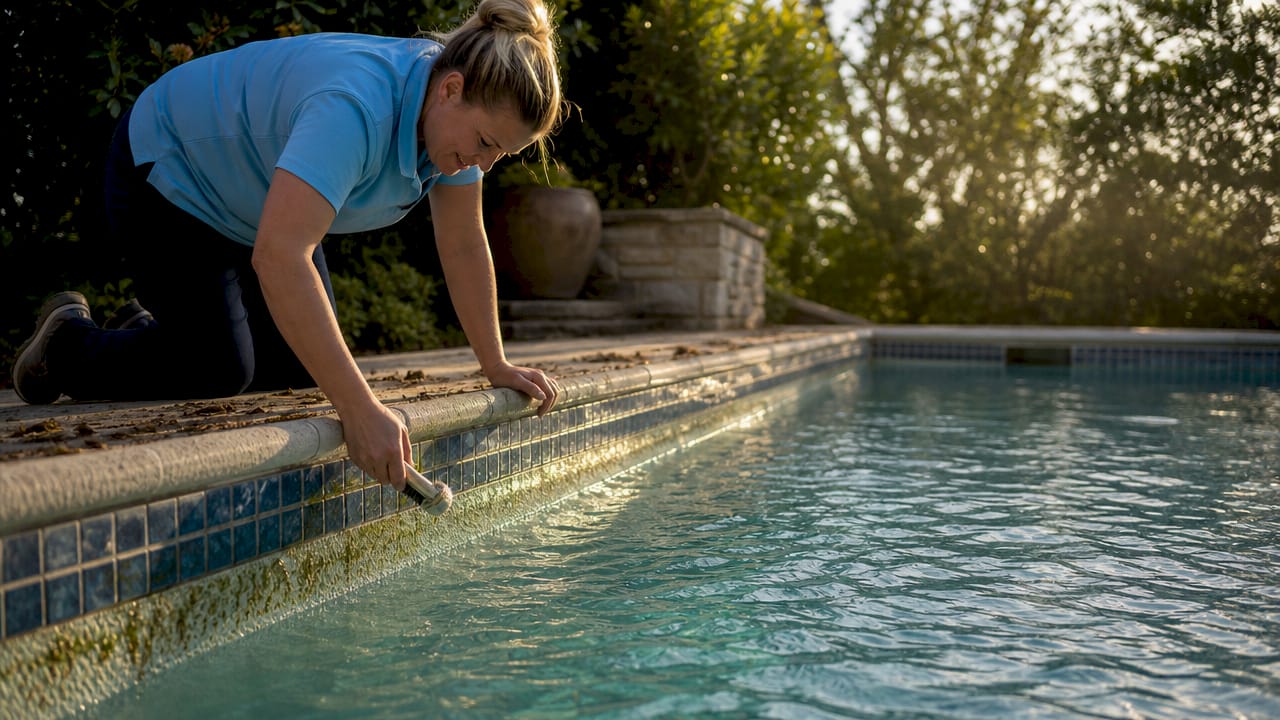
The color of an organic stain tells you a lot. Green stains typically point to algae. Brown or dark brown marks usually come from decomposing leaves or tannins from nearby trees. Berries leave deep purple or reddish-brown spots that look alarming but respond well to treatment.
The diagnostic test for organic stains is simple. Place a chlorine puck directly on the stain for 30 seconds. If the color lightens or disappears, you are dealing with an organic stain. That result means chlorine shock combined with vigorous brushing is the right treatment. Organic stains often lighten within 24 hours of raising free chlorine to SLAM (Shock, Level, And Maintain) levels with consistent brushing.
Prevention beats treatment every time. Debris left sitting on a pool floor or steps overnight has enough time to begin staining the surface, especially on porous plaster finishes.
- Remove leaves, berries, and debris from the pool daily during fall and storm seasons
- Run your filtration system long enough to turn over the full water volume each day
- Keep free chlorine levels in the 2–4 ppm range to neutralize organic material before it settles
- Brush pool walls and floors weekly to prevent biofilm and algae from taking hold
- Trim overhanging trees and shrubs to reduce debris load near the water
Pro Tip: Skim the pool surface every morning before the sun heats the water. Warm water accelerates organic breakdown, and debris that sits through a hot afternoon stains faster than debris removed at dawn.
How do metals in pool water lead to staining?
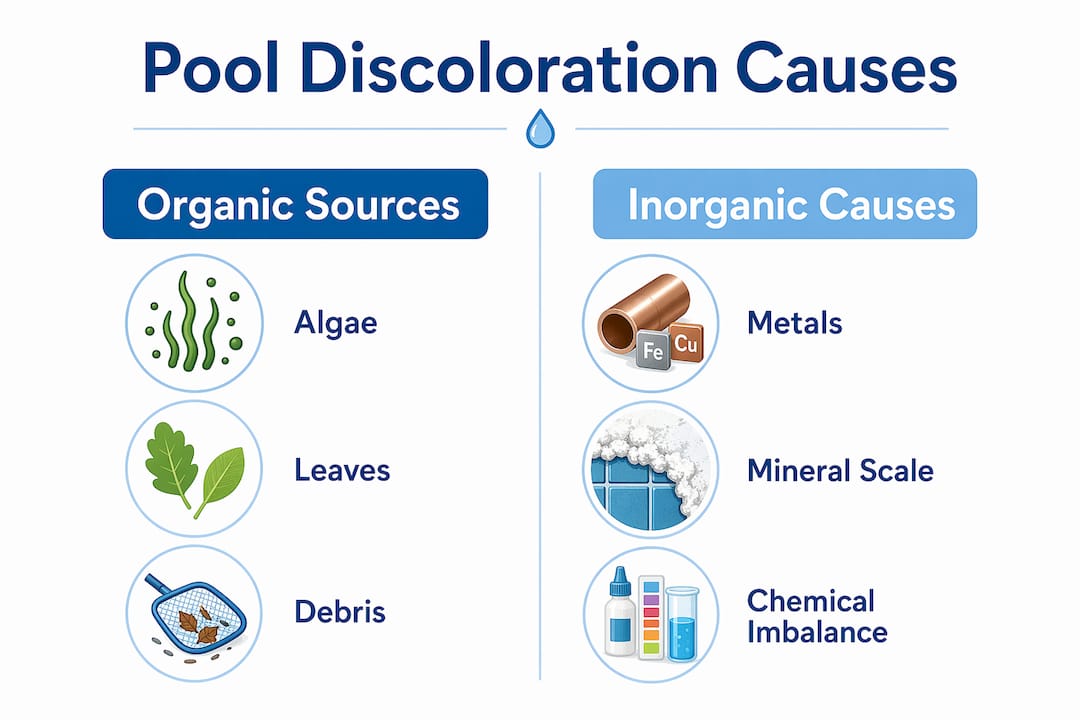
Metal stains are the most misunderstood category of pool discoloration. They look dramatic, they appear suddenly, and they often get worse when pool owners try to treat them with chlorine. The source of the metals matters because it shapes both the color of the stain and the correct fix.
Common metal sources include:
- Iron: Enters through well water, corroded steel fittings, or old plumbing. Produces rust-red, orange, or brown stains.
- Copper: Comes from corroded copper pipes, copper-based algaecides, or pool heater components. Leaves blue-green or teal stains.
- Manganese: Found in well water and some municipal supplies. Creates dark brown, black, or purple discoloration.
Well water iron concentrations frequently run 0.3–2.0 ppm, which exceeds EPA secondary standards and causes staining within days of filling a pool. Pool owners in rural Florida who rely on well water face this problem regularly, and the staining can appear almost overnight after the first chlorination.
Water chemistry plays a direct role in how quickly metals precipitate. pH below 7.2 causes metals to leach from plumbing; pH above 7.8 triggers metal precipitation onto surfaces. Both extremes accelerate staining, which is why balanced chemistry is the first line of defense.
The vitamin C test is the definitive field method for identifying metal stains. Press a vitamin C tablet (ascorbic acid) against the stain for 30–60 seconds. If the stain lightens or disappears, metals are the cause. This test confirms the diagnosis without damaging the pool surface and tells you exactly which treatment path to follow.
Chlorine shock oxidizes dissolved metals, causing them to bond permanently to the pool surface. Applying shock before confirming the stain type turns a treatable problem into a much harder one. The correct treatment sequence starts with ascorbic acid to lift the metals into suspension, followed immediately by a metal sequestrant to keep them dissolved. Delayed sequestrant addition results in metals rebonding to surfaces when chlorine or pH rises, which means the stain comes back.
Pro Tip: If you suspect metal stains, hold off on any shock treatment until you complete the vitamin C test. One premature shock application can set the stain permanently into plaster or Pebble Tec® surfaces.
How does mineral scale cause white or gray pool discoloration?
Mineral scale produces a different kind of discoloration. Instead of colored stains, you get white, gray, or tan deposits that form on plaster, tile grout, and waterline surfaces. The cause is calcium and other minerals precipitating out of the water when chemistry falls out of balance.
High pH above 7.8 triggers calcium precipitation, and the resulting scale traps metals and dirt, which compounds the discoloration problem. Scale also roughens pool surfaces, making them harder to clean and more likely to harbor algae. On plaster pools, heavy scale buildup can eventually require professional resurfacing to fully restore the surface.
The Langelier Saturation Index (LSI) is the standard tool professionals use to predict scaling risk. The LSI combines pH, calcium hardness, total alkalinity, temperature, and total dissolved solids into a single number. A positive LSI value means the water is scale-forming. A negative value means the water is corrosive. Keeping the LSI close to zero is the goal.
| Parameter | Ideal Range | Effect When Out of Range |
|---|---|---|
| pH | 7.2–7.8 | Below 7.2: metal leaching. Above 7.8: calcium scaling. |
| Calcium hardness | 200–400 ppm | Below 200: surface etching. Above 400: heavy scale deposits. |
| Total alkalinity | 80–120 ppm | Low: pH swings. High: pH lock and scaling. |
| LSI value | -0.3 to +0.3 | Outside range: active scaling or corrosion. |
Preventing scale is far easier than removing it. Test calcium hardness and pH weekly during summer when evaporation concentrates minerals faster. For existing scale, a pumice stone works on tile without scratching, but plaster surfaces need acid washing or professional treatment to avoid damage. For guidance on calcium buildup removal, Classicmarcite covers the process in detail for Florida pool owners.
Diagnostic steps and best practices to prevent pool staining
Correct diagnosis before any treatment is the rule that separates effective pool care from expensive trial and error. Two simple tests cover the most common stain types without requiring lab equipment.
- Run the chlorine puck test first. Place a chlorine tablet on the stain for 30 seconds. Lightening means organic. No change means metal or mineral.
- Follow with the vitamin C test if the chlorine test shows no change. Press a vitamin C tablet on the stain for 60 seconds. Lightening confirms metal stains. No change points to mineral scale.
- Test your water chemistry before treating anything. Check pH, total alkalinity, calcium hardness, and metals (iron, copper, manganese) with a full test kit or strip. This tells you what you are dealing with and prevents the wrong chemical from making things worse.
- Treat organics with chlorine shock and brushing. Raise free chlorine to SLAM levels and brush the stained area twice daily until the stain clears.
- Treat metal stains with ascorbic acid first, then sequestrant. Never shock the pool until metals are fully sequestered and the water has been filtered for at least 48 hours.
- Treat mineral scale by correcting pH and calcium hardness. Lower pH to 7.2–7.4 temporarily to dissolve light scale, then balance all parameters to prevent recurrence.
- Schedule a professional water test quarterly. Home test kits miss trace metals and subtle hardness shifts that accumulate over a season. A pool professional using photometric testing catches problems before they become stains.
For a full breakdown of pool stain treatment steps, Classicmarcite provides a complete guide covering each stain type.
Pro Tip: Never shock a pool when you have confirmed or suspected metal stains. Chlorine oxidizes dissolved iron, copper, and manganese, bonding them to the surface and turning a removable stain into a permanent one.
Consistent pool water quality management is the most effective long-term strategy. Test weekly, adjust chemistry promptly, and remove debris before it has time to stain. Pools that follow this routine rarely develop serious discoloration problems.
Preventing stains from organic debris also means thinking about your pool’s surroundings. Homeowners dealing with leaves and algae from nearby trees can find practical advice on reducing debris buildup in residential pools. Addressing metal corrosion in plumbing and fixtures before it reaches the water is equally important, and pool plumbing corrosion prevention covers the steps that stop metal staining at the source.
Key Takeaways
Pool discoloration is caused by organic debris, dissolved metals, or mineral scale, and each type requires a specific diagnosis before any chemical treatment begins.
| Point | Details |
|---|---|
| Diagnose before treating | Use the chlorine puck test for organic stains and the vitamin C test for metal stains before applying any chemicals. |
| Never shock metal stains | Chlorine shock oxidizes dissolved metals and bonds them permanently to pool surfaces, making removal far harder. |
| Balance pH between 7.2 and 7.8 | pH outside this range accelerates both metal leaching and calcium scaling, the two most damaging stain sources. |
| Use sequestrant after ascorbic acid | Ascorbic acid lifts metals into suspension; a sequestrant must follow immediately to prevent re-precipitation. |
| Test water weekly in summer | Heat and evaporation concentrate minerals faster, raising scaling risk and making consistent testing critical. |
The mistake I see pool owners make every single time
The pattern is almost universal. A pool owner notices a brown or rust-colored stain, assumes it is algae or dirt, and dumps in a bag of shock. Within 48 hours, the stain is darker, harder, and bonded to the surface in a way that now requires professional treatment. That one decision, shocking without diagnosing, turns a $20 fix into a $200 problem or worse.
What surprises most pool owners is how much regional water quality shapes their staining risk. Florida pools fed by well water face a fundamentally different challenge than pools on municipal supply. High iron and manganese in well water means metal staining is almost inevitable without a sequestrant program built into the regular maintenance routine. Knowing your source water is not optional. It is the starting point for every maintenance decision.
The other mistake I see constantly is treating discoloration as a one-time event rather than a symptom of ongoing chemistry drift. A stain that comes back three weeks after treatment is telling you that the underlying chemistry problem was never fixed. Ascorbic acid removes the stain. Balanced pH, controlled calcium hardness, and a sequestrant program prevent it from returning.
Proactive maintenance costs a fraction of reactive treatment. A weekly 10-minute test-and-adjust routine prevents the kind of surface damage that eventually requires pool resurfacing in Florida. The pool owners who never deal with serious staining are not lucky. They are consistent.
— Results
When staining points to a deeper surface problem
Persistent discoloration that returns despite correct chemical treatment often signals that the pool surface itself has degraded. Porous or etched plaster absorbs metals and organics faster than a sound surface, making staining more frequent and harder to clear.

Classic Marcite has resurfaced over 100,000 pools across Florida since 1988, and the team regularly encounters pools where staining is the visible sign of a surface that has reached the end of its useful life. Professional pool resurfacing with materials like Pebble Tec® creates a denser, more stain-resistant finish that holds up against Florida’s water chemistry and sun exposure. If your pool stains repeatedly despite correct maintenance, a resurfacing consultation with Classicmarcite is the logical next step. Contact the team for a free estimate and a clear assessment of what your pool surface actually needs.
FAQ
What are the three main causes of pool discoloration?
Pool discoloration is caused by organic stains from debris and algae, metal stains from dissolved iron, copper, or manganese, and mineral scale from calcium deposits triggered by pH imbalance. Each type requires a different treatment approach.
Why is my pool green after shocking it?
A green color after shocking usually means copper is present in the water. Chlorine shock oxidizes dissolved copper, causing it to precipitate and stain the pool surface or turn the water green. Test for metals before shocking again.
How do I know if my pool stain is from metal or algae?
Press a chlorine tablet on the stain for 30 seconds. If it lightens, the stain is organic. If there is no change, press a vitamin C tablet on it for 60 seconds. Lightening confirms a metal stain diagnosis.
Can I prevent pool staining without professional help?
Yes, for most cases. Maintain pH between 7.2 and 7.8, test water weekly, remove debris daily, and use a metal sequestrant if your water source contains iron or manganese. Consistent chemistry control prevents the majority of staining.
When should I call a professional about pool discoloration?
Call a professional when stains return repeatedly after correct treatment, when the pool surface feels rough or pitted, or when the discoloration covers large areas of the pool floor or walls. These signs point to surface degradation that chemical treatment alone cannot fix.