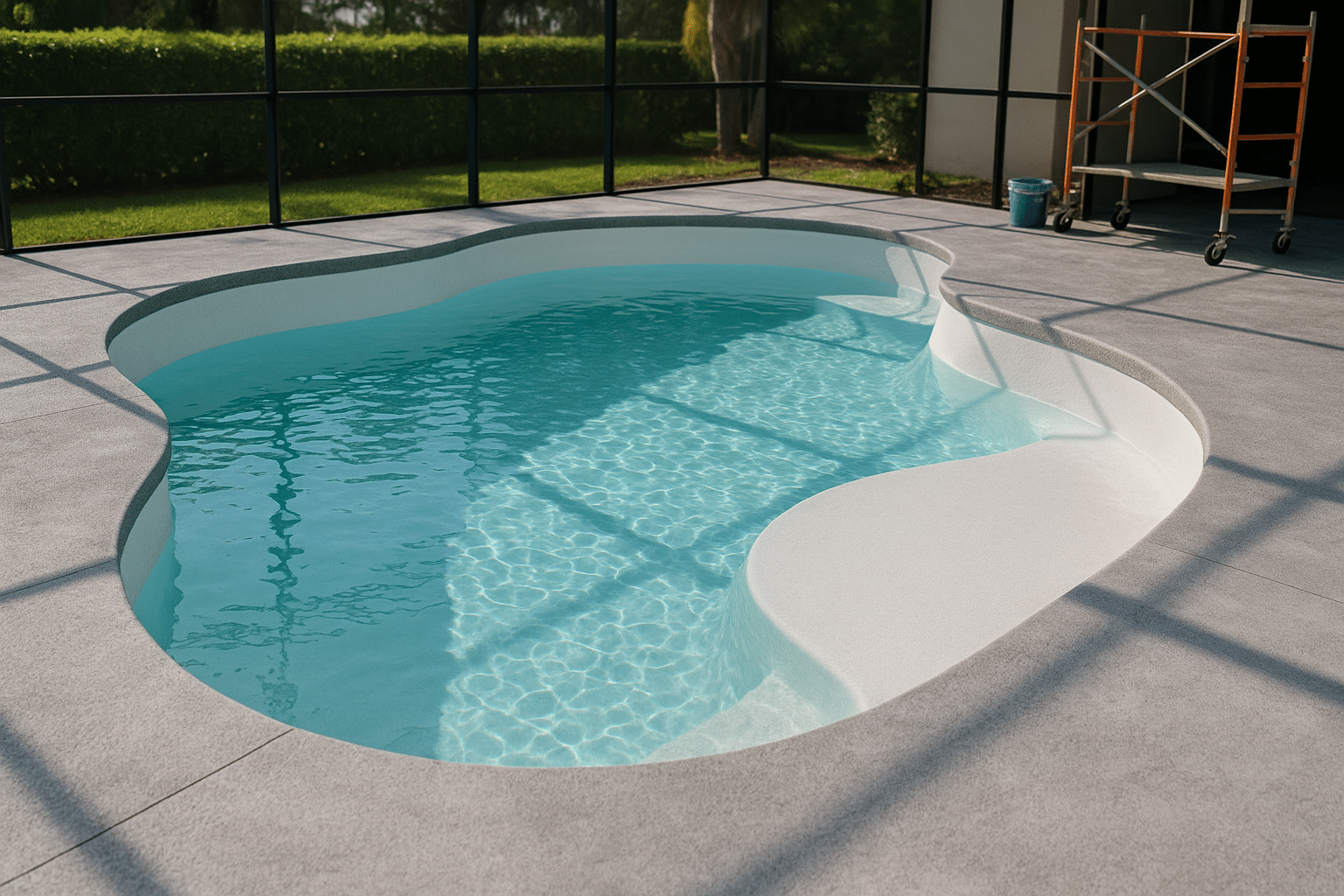
TL;DR: Pool resurfacing in Central Florida typically runs $6,500–$15,000 for a standard residential pool in 2026, with finish type, pool size, and surface condition driving most of the variation. Aggregate finishes like Pebble Tec® cost more upfront but last significantly longer than basic plaster. Getting a free on-site estimate is the only reliable way to pin down your exact number.
If your pool surface is rough underfoot, stained in patches, or simply showing its age, you’re probably wondering: what does it actually cost to resurface a pool in Central Florida? The honest answer is that pricing varies—but not randomly. A handful of predictable factors drive almost every quote you’ll receive.
This guide breaks down current 2026 pricing by finish type, explains what pushes costs up or down, and tells you when resurfacing is genuinely urgent versus when you can wait a season.
2026 Pool Resurfacing Cost Ranges for Central Florida
Pool resurfacing in Central Florida typically runs $4,000 to $10,000 for a standard residential pool. Larger pools, premium finishes, difficult access, or significant surface damage can push the price to $15,000 or more, and if the project also includes new waterline tile, coping, deck work, or equipment upgrades, the total may range from $10,000 to $22,000.
In 2026, the average cost to resurface a standard 15′ x 30′ in-ground pool in Orlando ranges from $6,500 to $15,000, with most Central Florida homeowners spending approximately $11,500 for a high-quality quartz or pebble aggregate finish.
Nationally, pool resurfacing costs $6,000 to $15,000 on average, depending on the pool size, type, and finishing material. Central Florida pricing sits at the mid-to-upper end of that range due to year-round pool use and sustained local demand.
Cost by Finish Type
The finish you choose is the single biggest lever on your final price. Here is how the main options stack up in the Central Florida market:
White Plaster (Marcite)
Traditional white plaster—sometimes called marcite—is the most affordable starting point. Replastering a concrete pool costs between $3,000 and $6,500 on average. It is the most common type of resurfacing for traditional gunite and shotcrete pools. White plaster is the standard material—a mix of portland cement, white marble dust, and water. All plaster work on pools must meet ACI 524R, which is the American Concrete Institute’s official guide to Portland cement plastering.
The tradeoff: plaster is the most maintenance-intensive finish. Caring for a plaster pool takes more time and effort—and chemicals—than aggregate finishes. You will need to have a plaster pool resurfaced roughly every five years in high-use conditions.
Quartz Aggregate
Typical pool replaster costs range from $4,000 to $7,000 for standard plaster, while pool refinishing prices with quartz aggregate finishes average between $6,500 and $10,000. Quartz blends white cement with crushed quartz crystals for a harder, more stain-resistant surface that holds color better and lasts longer than plain plaster. Some guides estimate quartz can last about 10 to 15 years (results vary by care and conditions).
Pebble Aggregate (Pebble Tec®, Pebble Sheen®, Pebble Fina®)
Pebble finishes are the premium tier. A pebble or stone finish in the Orlando market runs $11,000–$18,000 with a 20+ year lifespan.
A pebble pool finish is an aggregate finish made from natural pebbles blended with cement, pigments, and strengthening agents. It creates a textured, durable surface that provides waterproofing and color while resisting cracking and fading better than plain plaster.
Regular maintenance and proper water chemistry can help you achieve the maximum lifespan of your PebbleTec pool finish, which, with proper care, can last decades without needing resurfacing. PebbleTec offers a unique dual warranty: the manufacturer provides a warranty on product quality while authorized applicators provide a warranty on workmanship.
Classic Marcite is the largest authorized Pebble Tec® applicator in Central Florida, and is also licensed to install Pebble Sheen®, Pebble Fina®, and Beadcrete®—so you get the manufacturer’s dual warranty coverage backed by a crew of direct employees who do this work every day.
Quick Comparison Table
- White Plaster: ~$4,000–$7,000 | Lifespan 5–10 years | Lowest upfront cost, highest long-term maintenance
- Quartz Aggregate: ~$6,500–$10,000 | Lifespan 10–15 years | Mid-range cost and durability
- Pebble Aggregate: ~$10,000–$18,000 | Lifespan 20+ years | Highest upfront cost, lowest long-term cost per year
What Else Affects Your Final Quote?
Pool Size and Surface Area
Pool size directly controls how much material and labor you need. Larger pools cost more because the entire surface area must be covered. Most contractors price resurfacing work per square foot, with average costs ranging from $3 to $15 per square foot depending on the material. A standard 12×24-foot pool has about 640 square feet of surface area including the floor, walls, and steps. A larger 16×32-foot pool has closer to 1,100 square feet. That difference can add $1,500 to $6,000 to the total job.
Surface Condition and Chip-Out
Size matters, but the existing surface condition and chosen finish can have an even greater effect on the final quote. If old plaster has delaminated, your contractor must remove it before applying the new finish—a process called chip-out. On an average pool of approximately 14×28 ft (400 sq ft), a chip-out in Orlando and Central Florida will cost between $2,300 and $2,500.
It is not always necessary to chip out the existing pool finish unless you have delaminated areas in the pool surface or your contractor finds acoustic delamination. In most cases, the existing surface can be prepped, a bond coat applied, and the new finish applied over it.
Seasonal Timing
While Florida has a year-round swimming season, the best time to book a resurfacing project in Orlando is during the late fall and winter months. Scheduling between October and February helps avoid peak summer demand and the high humidity that can complicate the curing process of new finishes. Booking during the off-peak season can sometimes result in a 5–10% discount or faster project start dates.
Add-On Scope (Tile, Coping, Deck)
Many homeowners bundle additional work while the pool is already drained. An overall pool upgrade that includes refinishing the entire surface, replacing the waterline tile and decking, and repairing damaged plumbing or electrical issues will cost $8,000 to $22,000 or more depending on pool size, local labor rates, and scope of work.
Classic Marcite handles all of this under one roof—full pool renovations and remodels including tile, waterline replacement, deck resurfacing, and structural repairs—so you are not coordinating multiple contractors around one drained pool.
7 Signs Your Pool Needs Resurfacing Now
Not sure if it is time? Key signs that your pool may need resurfacing include flaking or peeling plaster, persistent surface stains, rough texture on the pool surface, visible cracks, discoloration of finishes, loss of pebbles in pebble finishes, and consistent water level drops indicating potential leaks.
- Rough, sandpaper texture. If the surface feels like sandpaper, scratches feet, or snags swimwear, the finish may be worn enough to expose aggregate or etched plaster.
- Stains that keep coming back. The staining that signals a resurfacing need keeps coming back, resists treatment, or has permanently changed the surface color in irregular patches—typically because the surface has become too porous to hold a uniform finish.
- Crazing or spiderweb cracks. Fine surface cracks signal plaster that has lost its flexibility. Hairline cracks left untreated widen and allow water to reach the shell.
- Peeling or flaking plaster (spalling). Peeling plaster cannot be patched in any meaningful way. Spot repairs will be visible and will not address the underlying chemistry-driven degradation happening across the rest of the surface. A full resurface is the appropriate response.
- Dropping water level. If you are adding water more than once a week and a bucket test rules out evaporation, a porous or cracked surface may be leaking.
- Hollow sound when tapped. Tapping the wall with a hard object and hearing a hollow thud indicates delamination beneath the surface. If delamination goes unnoticed, it can lead to more substantial issues, including leaks and significant structural damage.
- Age alone. Pool resurfacing is typically required every 10 years to maintain the structural integrity and visual appeal of your pool. If yours has not been touched in 15 or 20 years, budget accordingly.
What the Process Looks Like
A typical pool resurfacing job in Central Florida follows these steps:
- Drain the pool. The pool is fully drained, usually by submersible pump.
- Surface prep. The contractor chips off the old plaster layer first—a process called chipping or sandblasting—that prepares the rough concrete shell underneath. If the surface is sound, prep may involve pressure washing and a bond coat instead.
- Apply the finish. The contractor applies the new finish by hand in smooth coats. A skilled plasterer uses a magnesium trowel to finish the surface and push out air pockets. Aggregate finishes like Pebble Tec® require specialized application technique—a key reason manufacturer authorization matters.
- Cure and fill. The pool is refilled and start-up chemicals are carefully balanced. Curing typically takes 28 days before the surface reaches full hardness.
Every Classic Marcite crew member is a direct employee—never a subcontractor. That matters at the application stage, where technique and consistency directly affect how long the finish lasts and whether your manufacturer warranty stays valid.
HOA, Hotel, and Commercial Pools: What Changes?
Commercial pools follow the same finish logic but add layers of complexity. Commercial pools are larger, subject to stricter health and safety codes, and the resurfacing scope is bigger. Scheduling around bather load, health department inspection timelines, and seasonal occupancy patterns all affect the project timeline and budget.
Classic Marcite serves HOAs, property managers, hotels, and resorts across the Orlando metro from our Orlando office and across Jacksonville and Northeast Florida from our Jacksonville location—completing 1,000+ projects per year with the same crews and the same quality standards.
How to Get an Accurate Number for Your Pool
The only way to determine the exact cost of resurfacing a pool is to have it inspected. Size matters, but the existing surface condition and chosen finish can have an even greater effect on the final quote.
Classic Marcite provides free, no-obligation on-site estimates with transparent pricing. There is no cost to find out exactly where your pool stands—and knowing lets you plan the project on your schedule rather than in emergency mode. Request your free estimate and a Classic Marcite specialist will walk your pool, assess the surface condition, and give you a clear, itemized number.