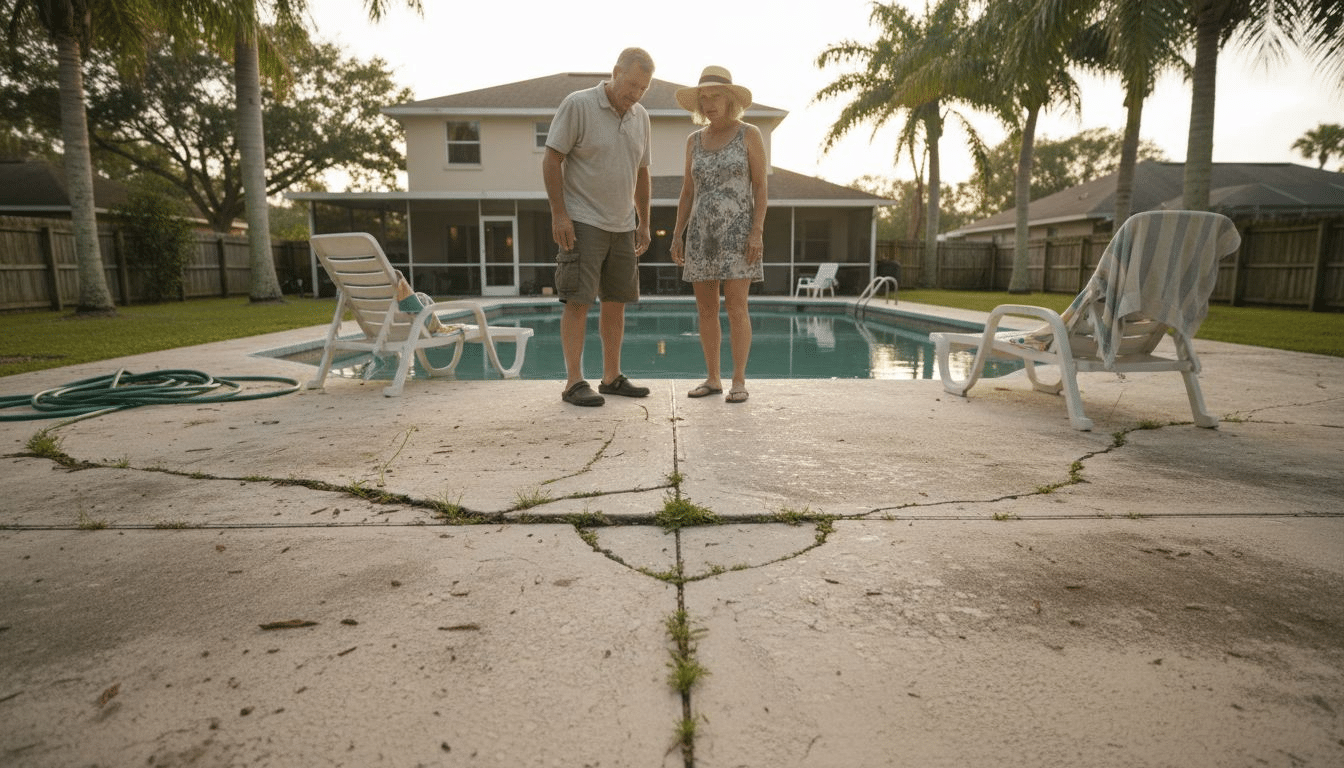
Every Orlando or Jacksonville homeowner knows the frustration of seeing unexpected lines appear across their pool deck. These subtle cracks are not just unpleasant to look at—they are signals of deeper issues that, if ignored, can threaten both property value and safety. By exploring the basics of surface disruptions, you will gain clear insight into what causes pool deck cracking in Florida and learn practical steps to protect your investment.
Table of Contents
- Pool Deck Cracking: Definition And Basics
- Types Of Cracks On Pool Decks
- Why Florida Decks Crack: Key Causes
- Warning Signs And Potential Risks
- Repair Options And Prevention Tips
Key Takeaways
| Point | Details |
|---|---|
| Understanding Causes | Pool deck cracking in Florida is driven by extreme temperatures, high humidity, and unstable limestone soils, leading to various structural challenges. |
| Types of Cracks | Awareness of different crack types, such as shrinkage and settlement cracks, helps homeowners assess severity and need for repairs. |
| Warning Signs | Key indicators of serious cracks include widening patterns, significant widths over 1/8 inch, and visible rust stains, which must be addressed promptly. |
| Repair and Prevention | Proactive measures, such as regular inspections and quality concrete mixes, can prevent costly repairs and maintain deck integrity. |
Pool deck cracking: definition and basics
Pool deck cracking represents a complex structural issue affecting concrete surfaces surrounding swimming pools, particularly in Florida’s challenging climate. These surface disruptions emerge through multiple mechanisms, often resulting from environmental stresses and material fatigue. Understanding the fundamental causes helps homeowners identify potential problems before they escalate.
Concrete surfaces experience cracking through several primary mechanisms, as outlined by concrete structural research. The key factors contributing to pool deck deterioration include:
- Thermal expansion and contraction causing mechanical stress
- Moisture infiltration leading to internal structural changes
- Settlement and ground movement creating uneven surface pressures
- Material aging and degradation over time
In Florida’s unique environment, pool deck cracking becomes particularly prevalent due to extreme temperature variations and high humidity levels. The state’s limestone-based soils and frequent rainfall create additional challenges for concrete surfaces. Microcracks can develop through multiple processes, including:
- Rapid drying during intense sunlight
- Freeze-thaw cycles
- Chemical reactions within concrete compounds
- Structural load-bearing stress
Pool deck cracks are not just cosmetic issues – they represent potential structural vulnerabilities that require professional assessment.
Pro tip: Regular visual inspections and addressing minor cracks immediately can prevent extensive and costly pool deck repairs in the future.
Types of cracks on pool decks
Pool deck surfaces can develop multiple types of cracks, each with distinct characteristics and underlying causes. Concrete crack classification research reveals several primary crack categories that Florida homeowners should understand and monitor carefully.
The most common types of pool deck cracks include:
- Shrinkage cracks: Narrow, shallow fissures caused by concrete drying and losing moisture
- Settlement cracks: Deeper structural breaks resulting from ground movement or unstable substrate
- Thermal expansion cracks: Surface disruptions caused by temperature fluctuations
- Structural stress cracks: Wider breaks indicating potential load-bearing issues
- Freeze-thaw cracks: Damage from repeated temperature cycling, less common in Florida’s climate
Each crack type presents unique challenges for pool deck integrity. Shrinkage cracks typically appear early in a concrete surface’s lifecycle and are often hairline-thin. Settlement cracks, conversely, can indicate more serious foundational problems that require immediate professional assessment. Thermal expansion cracks frequently emerge in Florida’s extreme heat, where concrete surfaces experience significant temperature variations.
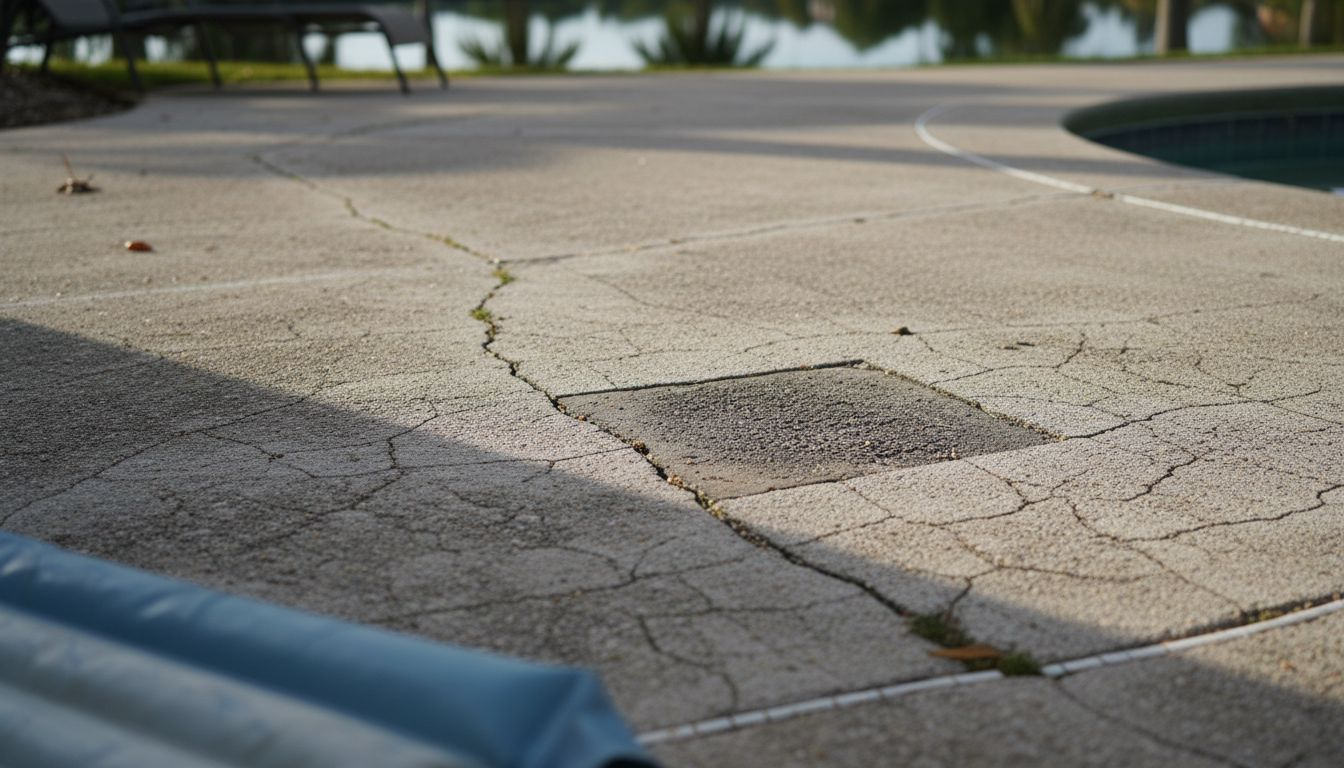
Here’s a quick comparison of common pool deck crack types and what they indicate:
| Crack Type | Key Indicator | Usual Severity |
|---|---|---|
| Shrinkage | Hairline, shallow | Mild, mostly cosmetic |
| Settlement | Deep, uneven surface | Serious, structural risk |
| Thermal Expansion | Surface-level, spread | Moderate, worsens over time |
| Structural Stress | Wide, jagged edges | High, urgent repair |
| Freeze-Thaw | Flaking, localized | Low in Florida, rare |
Not all cracks are equal – some represent minor cosmetic issues, while others signal potential structural vulnerabilities.
Pro tip: Photograph and measure any new cracks to track their progression and provide accurate information to repair professionals.
Why Florida decks crack: key causes
Florida’s unique environmental conditions create a perfect storm for pool deck cracking, with multiple complex factors contributing to structural deterioration. Comprehensive deck cracking research reveals that pool decks in the Sunshine State face extraordinary challenges from climate and geological conditions.
The primary causes of pool deck cracking in Florida include:
- Extreme temperature variations creating thermal stress
- High humidity accelerating concrete moisture interactions
- Limestone substrate causing unpredictable ground movement
- Intense ultraviolet radiation degrading surface materials
- Frequent rainfall introducing additional moisture stress
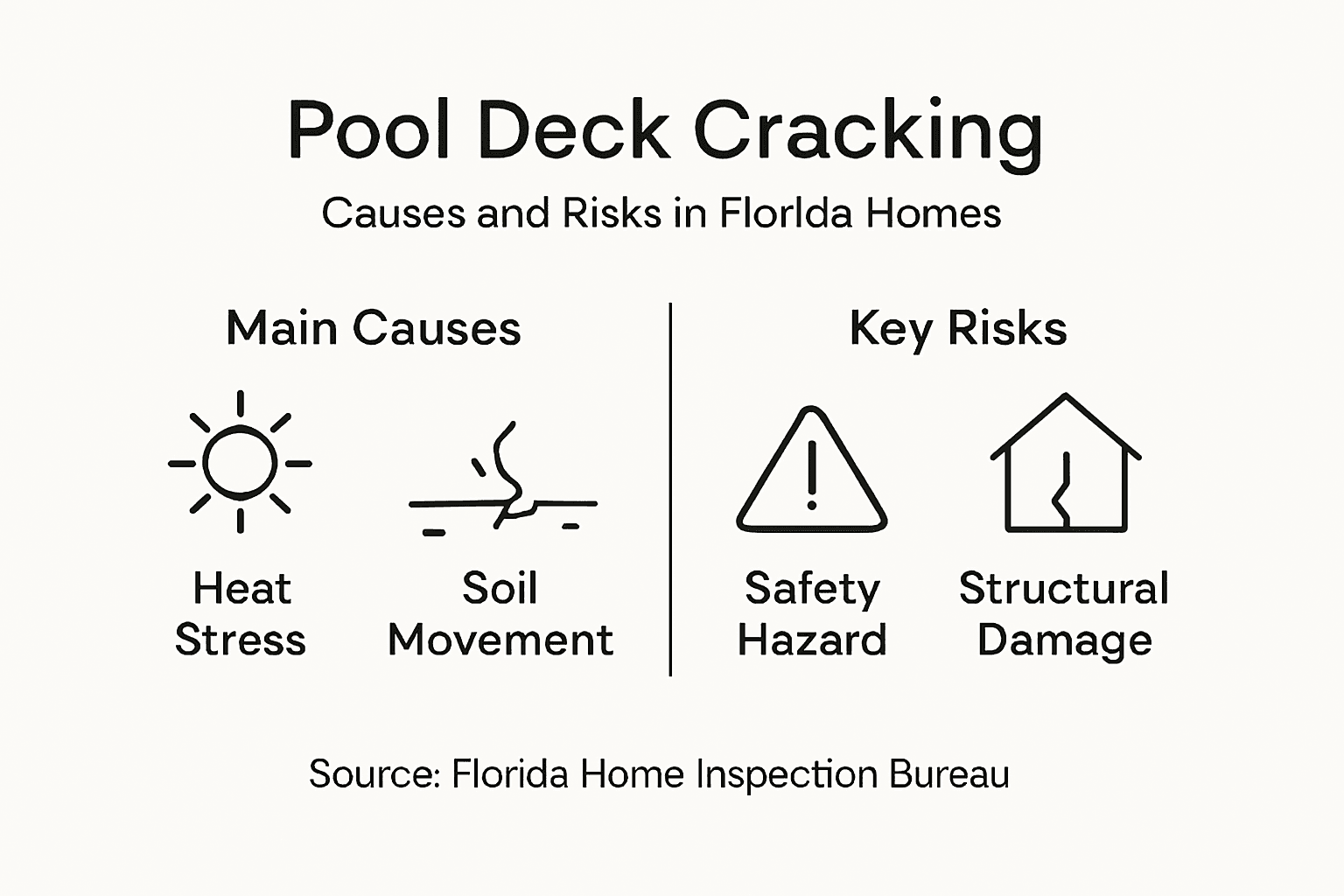
The state’s geological composition plays a critical role in deck deterioration. Florida’s limestone-based soils are inherently unstable, expanding and contracting with moisture changes. This constant movement creates significant stress on concrete surfaces, leading to microscopic fractures that can develop into larger structural problems. Thermal expansion becomes particularly pronounced during Florida’s intense summer months, where surface temperatures can exceed 140 degrees Fahrenheit.
Pool deck cracks in Florida are not just cosmetic issues – they represent complex interactions between environmental forces and construction materials.
Pro tip: Schedule professional inspections every two years to catch and address potential crack development before they become significant structural problems.
Warning signs and potential risks
Pool deck cracks represent more than cosmetic damage – they can signal serious structural vulnerabilities. Critical structural failure research reveals that seemingly minor surface disruptions can indicate profound underlying risks for Florida homeowners.
The most critical warning signs of potential structural issues include:
- Widening crack patterns spreading across multiple deck sections
- Vertical displacement where concrete sections appear uneven
- Significant crack width exceeding 1/8 inch in thickness
- Water pooling around or within crack formations
- Rust stains indicating potential reinforcement steel corrosion
- Surface spalling where concrete begins to chip or flake
Structural engineers emphasize that pool deck cracks can compromise not just aesthetic appeal, but the entire structural integrity of surrounding areas. In Florida’s challenging environment, these warning signs can rapidly escalate from minor surface imperfections to potential safety hazards. Hairline cracks might seem insignificant, but they can become entry points for moisture, leading to reinforcement corrosion and progressive structural degradation.
Seemingly minor surface cracks can become catastrophic structural failures if left unaddressed.
Pro tip: Measure and photograph any new cracks, tracking their progression to provide precise documentation for professional evaluation.
Repair options and prevention tips
Addressing pool deck cracks requires a strategic approach that combines immediate repair techniques with long-term preventative measures. Comprehensive concrete repair methods reveal multiple strategies for maintaining pool deck integrity in Florida’s challenging environment.
Repair options for pool deck cracks include:
- Epoxy injection for sealing narrow, structural cracks
- Surface routing and sealing for wider surface disruptions
- Concrete overlays to restore smooth, uniform surfaces
- Stitching techniques for stabilizing significant structural breaks
- Polyurethane foam injection for addressing underlying ground movement
Prevention remains the most cost-effective strategy for managing pool deck deterioration. Homeowners can implement several proactive measures to minimize cracking risks, such as maintaining consistent moisture levels, using high-quality concrete mixes with shrinkage-compensating additives, and ensuring proper initial curing. Professional installation with strategic expansion joint placement can significantly reduce the likelihood of future cracking.
Below is a summary of repair methods and when each is most effective:
| Repair Method | Best Use Case | Durability |
|---|---|---|
| Epoxy Injection | Narrow structural cracks | Long-lasting when done professionally |
| Surface Routing & Seal | Wider non-structural cracks | Good for moderate wear |
| Concrete Overlay | Multiple minor cracks | Durable but adds thickness |
| Stitching | Severe structural break | Highly durable |
| Polyurethane Injection | Addressing ground movement | Flexible, adapts to shifts |
Proactive maintenance is always more affordable than extensive structural repairs.
Pro tip: Invest in professional annual inspections to catch and address potential deck issues before they become expensive structural problems.
Protect Your Florida Pool Deck with Expert Renovation Solutions
Pool deck cracking can seriously undermine the safety and beauty of your outdoor space. In Florida, extreme temperature changes, unstable limestone soils, and moisture challenges create the perfect conditions for cracks that range from minor shrinkage to severe structural stress. If you want to avoid costly repairs and keep your pool deck strong and stunning for years, professional resurfacing and repair are essential.

Classic Marcite has been the trusted choice since 1988 for homeowners and property managers in Orlando and Jacksonville who demand high-quality pool renovations. Our expertise with advanced materials like Pebble Tec® and proven repair techniques can effectively address issues like settlement cracks, thermal expansion damage, and surface spalling. Don’t let small cracks turn into big problems. Visit Classic Marcite today, explore our pool resurfacing services, and request a free estimate. Take action now to protect your investment and enjoy a durable, beautiful pool deck built for Florida’s unique environment.
Frequently Asked Questions
What causes pool deck cracking?
Pool deck cracking is primarily caused by extreme temperature variations, high humidity, moisture infiltration, ground movement, and material aging. These factors create mechanical stress on concrete surfaces, leading to various types of cracks.
How can I identify the type of crack in my pool deck?
Look for key characteristics: shrinkage cracks are narrow and shallow, settlement cracks are deeper and often indicate foundational issues, thermal expansion cracks are surface-level, and structural stress cracks are wider with jagged edges. Understanding these traits can help determine necessary actions.
What are the risks of ignoring pool deck cracks?
Ignoring pool deck cracks can lead to serious structural vulnerabilities. Small hairline cracks can grow into larger issues, leading to moisture infiltration, reinforcement corrosion, and eventual structural failure, compromising the safety and integrity of the pool area.
What repair options are available for pool deck cracks?
Repair options include epoxy injection for narrow cracks, surface routing and sealing for wider issues, concrete overlays for restoring surfaces, stitching techniques for stabilizing major cracks, and polyurethane foam injection to address underlying ground movement.
Recommended
- 7 Essential Pool Deck Renovation Tips For Florida Homes
- What Is Deck Resurfacing? Transforming Poolside Spaces
- Pool Deck Repair Process: Step-by-Step Guide For Success
- DIY Pool Crack Repair: Step-by-Step Guide For Homeowners
- Pool Refinishing Windermere FL
- Pool Renovation Winter Park FL
- Swimming Pool Remodeling The Villages FL