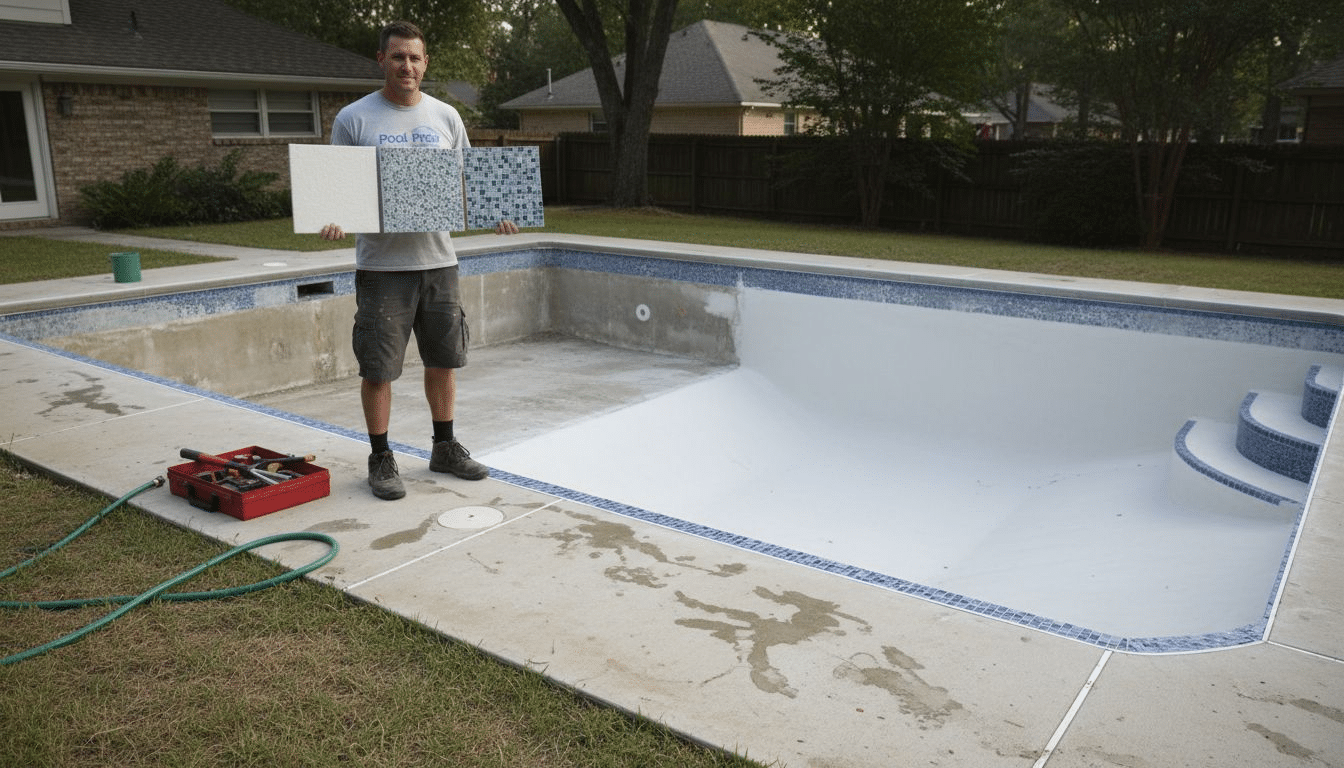
Over 60 percent of American homeowners will need to resurface a pool at some point, but the choices can seem endless. Selecting the right material affects not just the look of your pool but its comfort, safety, and longevity. From affordable plaster to luxury tiles, understanding the strengths and lifespan of each option helps you make a decision that protects your investment and fits your style.
Table of Contents
- 1. Plaster: The Classic Affordable Choice
- 2. Pebble Tec: Durable and Attractive Finish
- 3. Quartz Aggregate: Enhanced Strength and Color
- 4. Tile: Elegant Look and Easy Maintenance
- 5. Fiberglass: Fast Installation and Smooth Feel
- 6. Exposed Aggregate: Textured, Slip-Resistant Surfaces
- 7. Polished Aggregate: Sleek Appearance and Longevity
Quick Summary
| Takeaway | Explanation |
|---|---|
| 1. Plaster is budget-friendly | It offers an economical solution but requires resurfacing every 5 to 7 years due to wear. |
| 2. Pebble Tec enhances durability | This premium option lasts 15 to 20 years, making it a worthwhile long-term investment despite higher initial costs. |
| 3. Quartz aggregate offers versatility | This option combines aesthetic appeal with durability, lasting 10 to 14 years and customizable in color. |
| 4. Tile provides easy maintenance | With various designs, tiles are durable and maintain their appearance well, especially darker colors. |
| 5. Fiberglass is quick and low-maintenance | Ideal for minor repairs, it installs quickly and reduces algae growth due to its seamless surface. |
1. Plaster: The Classic Affordable Choice
Plaster remains the most traditional pool resurfacing material, offering homeowners a classic and budget friendly solution for pool renovation. With its smooth white surface and economical price point, plaster has been a go to option for decades in pool construction and restoration.
While pool plaster provides a clean and uniform appearance, it comes with specific performance characteristics homeowners should understand. Traditional white plaster typically lasts between five to seven years before requiring replacement or significant maintenance. This relatively short lifespan means periodic resurfacing will be necessary to maintain your pool’s aesthetic and functional quality.
Key Characteristics of Pool Plaster:
- Affordable initial installation cost
- Smooth white surface
- Quick application process
- Suitable for various pool shapes and sizes
The material works best in moderate climates and requires consistent care to prevent premature degradation. Homeowners in areas with intense UV exposure or extreme temperature fluctuations might experience faster surface wear. Staining and surface roughness can develop more quickly under challenging environmental conditions.
Pro tip: Schedule annual professional inspections to catch early signs of plaster deterioration and extend the surface lifespan through proactive maintenance.
2. Pebble Tec: Durable and Attractive Finish
Pebble Tec represents a premium pool resurfacing solution that combines exceptional durability with stunning visual appeal. Unlike traditional white plaster, this advanced material offers homeowners a remarkable 15 to 20 year lifespan with significantly enhanced aesthetic qualities.
Surface Characteristics of Pebble Tec:
- Extremely durable finish
- Textured natural appearance
- Longer lasting than standard plaster
- Multiple color and texture options
The unique composition of Pebble Tec involves embedding small stones or pebbles directly into the pool surface, creating a distinctive textured finish. This approach not only provides superior durability but also generates a more organic and visually interesting pool surface. Homeowners with freeform shaped pools will especially appreciate how the pebble surface enhances the natural landscape design.
While the initial installation cost is approximately double that of white plaster, the extended lifespan and aesthetic benefits make Pebble Tec an attractive long term investment. The surface becomes more visually appealing as it ages, with increasing texture that reveals the embedded stone elements.
Pro tip: Select lighter colored Pebble Tec options to minimize heat absorption and maintain a comfortable pool surface temperature during intense sunlight.
3. Quartz Aggregate: Enhanced Strength and Color
Quartz aggregate represents an intelligent middle ground between traditional plaster and premium pool resurfacing materials, offering homeowners enhanced durability and aesthetic versatility. This innovative surface material provides a 10 to 14 year lifespan while delivering superior visual appeal compared to standard white plaster.
Key Benefits of Quartz Aggregate:
- Approximately 40% more expensive than standard plaster
- Increased surface durability
- Customizable color options
- Attractive crystal embedded finish
Quartz aggregate surfaces start with a white plaster base that incorporates specialized quartz crystals. These crystals can be colored to create unique visual effects, transforming your pool from a simple swimming area into a stunning landscape feature. The embedded quartz not only adds aesthetic value but also provides additional surface strength and resistance to wear.
Unlike basic plaster mixes, premium quartz products often include specialized additives that enhance overall surface durability. This means your pool surface will maintain its appearance and structural integrity longer than traditional plaster finishes.
Pro tip: When selecting a quartz aggregate finish, choose lighter colors to reduce heat absorption and maintain a more comfortable pool surface during intense sunlight.
4. Tile: Elegant Look and Easy Maintenance
Tile represents a sophisticated and visually striking pool resurfacing option that offers both aesthetic appeal and practical functionality. With multiple design possibilities and durability, tiles can dramatically transform your pool’s appearance.
Tile Surface Characteristics:
- Long lasting waterline coverage
- Multiple size and color options
- Enhanced visual appeal
- Relatively easy maintenance
When selecting pool tiles, size matters significantly. The standard 6×6 inch tile provides the most economical and structurally sound option. Smaller 3×3 inch tiles create more grout lines, which can become potential weak points and collect dirt more readily. Homeowners should consider darker tile colors, as they tend to show less wear and maintain a fresher aesthetic over time.
Glass tiles offer an especially luxurious finish for high end pool renovations, providing exceptional shine and depth. These premium options can transform your pool surface with remarkable visual complexity, reflecting light and creating stunning water effects.
Pro tip: Schedule annual tile cleaning and grout maintenance to preserve the pristine appearance and prevent potential water damage or structural issues.
5. Fiberglass: Fast Installation and Smooth Feel
Fiberglass pool resurfacing offers homeowners a quick and modern solution for pool renovation, characterized by its incredibly smooth surface and rapid installation process. Unlike traditional resurfacing methods, fiberglass provides a seamless and non porous finish that resists algae growth and minimizes maintenance requirements.
Fiberglass Resurfacing Advantages:
- Rapid installation timeframe
- Smooth and non abrasive surface
- Low maintenance requirements
- Resistant to chemical interactions
- Versatile color and texture options
While pool paint can serve as a temporary solution, fiberglass represents a more comprehensive and long lasting approach to pool surface renovation. The material creates a uniform coating that effectively seals and protects the underlying pool structure, preventing potential water penetration and structural degradation.
Homeowners should understand that fiberglass resurfacing works best for pools with minimal structural damage. The smooth surface not only looks appealing but also provides a comfortable swimming experience, reducing the likelihood of scraped skin or uncomfortable textures often associated with older pool surfaces.
Pro tip: Consult a professional pool contractor to assess your specific pool conditions before selecting fiberglass as your resurfacing material, as not all pools are equally suited to this treatment.
6. Exposed Aggregate: Textured, Slip-Resistant Surfaces
Exposed aggregate pool surfaces offer a unique combination of durability, safety, and visual interest that sets them apart from traditional smooth pool finishes. These textured surfaces provide enhanced slip resistance and aesthetic complexity.
Exposed Aggregate Surface Features:
- Superior slip resistance
- Extended surface durability
- Natural looking appearance
- Varied color and texture options
- Enhanced visual depth
Unlike standard smooth plaster, exposed aggregate incorporates visible stones or pebbles directly into the pool surface. As the material ages, more of the embedded materials become exposed, creating an increasingly dynamic and attractive finish. This approach works particularly well for freeform shaped pools, where the natural texture can complement organic landscape designs.
The textured surface provides significant safety benefits by reducing the likelihood of slips and falls around pool areas. Homeowners with children or elderly family members will appreciate the additional traction provided by these more complex surface materials. Additionally, the varied texture helps mask minor imperfections and can hide dirt or minor staining more effectively than smooth surfaces.
Pro tip: Select lighter colored aggregate materials to minimize heat absorption and maintain a more comfortable pool surface temperature during intense sunlight.
7. Polished Aggregate: Sleek Appearance and Longevity
Polished aggregate represents the pinnacle of pool surface design, combining aesthetic sophistication with remarkable durability. These surfaces offer a premium solution that bridges the gap between traditional plaster and high end resurfacing materials.
Polished Aggregate Surface Characteristics:
- 10 to 14 year performance lifespan
- Approximately 40% more expensive than standard plaster
- Enhanced visual depth and sparkle
- Customizable color options
- Superior surface durability
Unlike standard white plaster, polished aggregate incorporates specialized quartz crystals that can be colored to create stunning visual effects. These embedded crystals not only add aesthetic appeal but also contribute to the surface strength and longevity. Professional contractors who use brand name products often include special additives that further enhance the material’s durability and performance.
The surface becomes increasingly attractive over time, with more of the embedded crystals becoming exposed and creating a dynamic, shimmering appearance. This makes polished aggregate an excellent choice for homeowners seeking a pool surface that looks better with age and provides long term value.
Pro tip: Select lighter colored aggregate materials to reduce heat absorption and maintain a more comfortable pool surface temperature during intense sunlight.
This table summarizes various pool resurfacing options, highlighting their unique characteristics, benefits, and suitability for different homeowner needs.
| Option | Features | Best For |
|---|---|---|
| Plaster | Affordable, smooth white surface, 5-7 year lifespan | Budget-conscious homeowners in moderate climates |
| Pebble Tec | Durable, textured, 15-20 year lifespan, premium installation cost | Long-term investment with aesthetic appeal |
| Quartz Aggregate | Durable, customizable colors, 10-14 year lifespan | Enhancing strength and color with moderate budget |
| Tile | Long-lasting, multiple design options, easy maintenance | Elegant look with practical functionality |
| Fiberglass | Smooth, rapid installation, low maintenance | Quick installation with minimal maintenance requirements |
| Exposed Aggregate | Textured, slip-resistant, natural appearance | Safety-focused with aesthetic complexity |
| Polished Aggregate | Durable, sparkling visual effect, customizable colors | High-end look with long-lasting durability and sophistication |
Elevate Your Pool Experience with Expert Resurfacing Solutions
Choosing the right pool resurfacing material is crucial for long-lasting beauty and durability. Whether you are considering Pebble Tec for its stunning texture and extended lifespan or Quartz Aggregate for a perfect balance of strength and color, addressing challenges like surface wear, slip resistance, and heat absorption is key. At Classic Marcite, we understand these concerns deeply and specialize in transforming pools in Orlando and Jacksonville with premium materials and workmanship that stand the test of time.
Experience the difference with:
- Industry-leading Pebble Tec applications for superior durability and appeal
- Customized interior finishes tailored to your pool’s shape and environment
- Expert repairs for tiles, decks, and equipment ensuring seamless renovations

Discover how our expertise in pool resurfacing can solve your pool renovation challenges and deliver a lasting, eye-catching upgrade. Visit Classic Marcite today for a free estimate and see why over 100,000 pools trust our craftsmanship. Don’t wait to revitalize your pool with materials and service designed to exceed expectations. Start your transformation now by exploring our pool resurfacing services and let the leaders in Central Florida bring your vision to life.
Frequently Asked Questions
What is the lifespan of different pool resurfacing materials?
The lifespan varies by material: traditional plaster lasts about 5 to 7 years, quartz aggregate lasts 10 to 14 years, and Pebble Tec can last 15 to 20 years. For long-lasting results, consider investing in a more durable option depending on your needs.
How do I choose the best pool resurfacing material for my needs?
Evaluate your budget, desired aesthetics, and maintenance preferences. For example, if you want a visually appealing and durable option, consider Pebble Tec or polished aggregate.
What maintenance do I need for my pool resurfacing?
Maintenance varies by material; for example, plaster requires annual inspections to catch early signs of deterioration, while tile needs periodic cleaning. Create a maintenance schedule to prolong the life of your pool surface.
Can I install a fiberglass resurfacing over an old plaster pool?
Yes, fiberglass resurfacing can be done over old plaster pools, but it works best on structures with minimal damage. Consult a professional to assess your pool’s condition before proceeding.
What are the safety benefits of using exposed aggregate for pool surfaces?
Exposed aggregate provides superior slip resistance due to its textured surface, which reduces the chance of slipping. This is especially important for families with children or elderly members.
How does the cost of quartz aggregate compare to traditional plaster?
Quartz aggregate is approximately 40% more expensive than traditional plaster, but it offers improved durability and aesthetic appeal. Consider this investment for enhanced long-term value in your pool renovation.