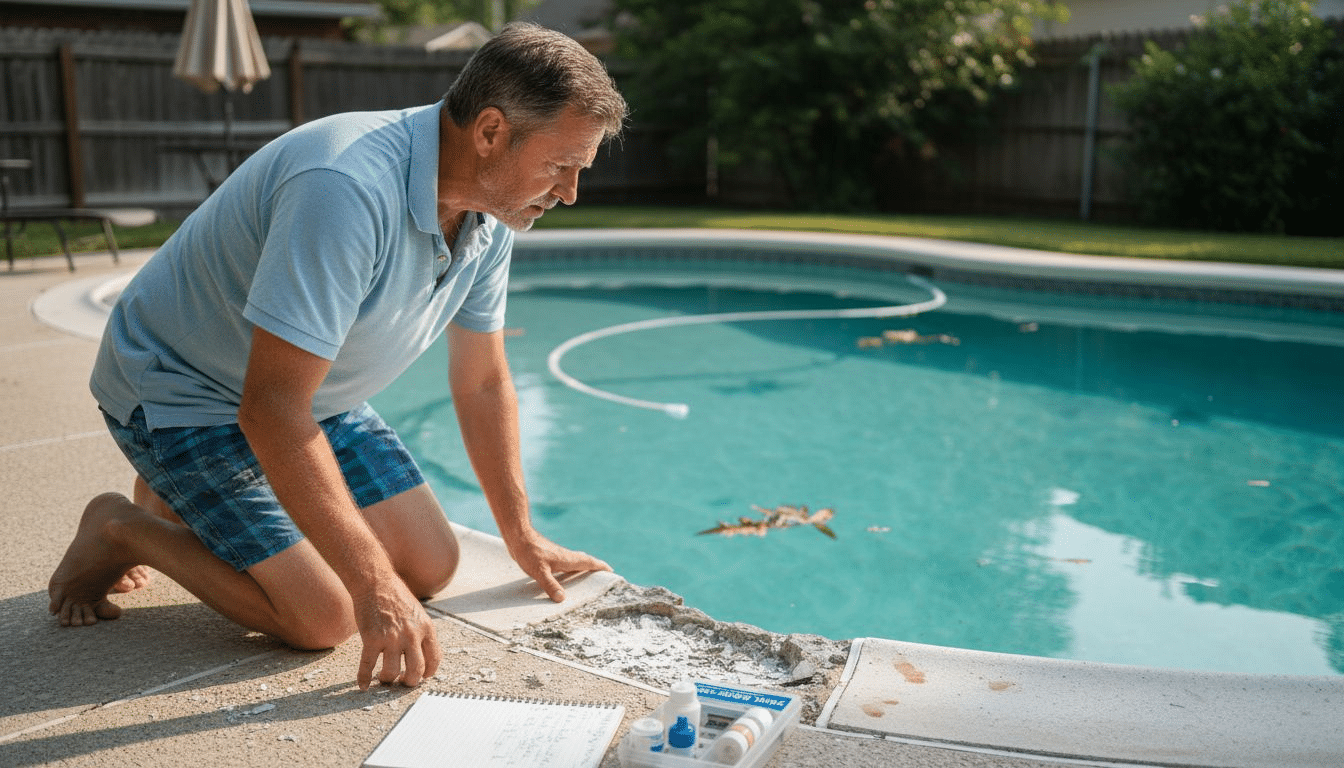
Most American homeowners are surprised to learn that over 60 percent of pool resurfacing projects stem from preventable surface damage. Caring for your pool involves more than just keeping the water clear—it means understanding what keeps the structure safe and beautiful year after year. Clearing up common myths and knowing the basics of pool resurfacing helps you avoid mistakes, protect your investment, and enjoy more dependable swimming seasons.
Table of Contents
- Pool Resurfacing Basics And Common Myths
- Types Of Pool Surfaces And Their Lifespans
- Warning Signs Your Pool Needs Resurfacing
- Factors That Accelerate Surface Deterioration
- Risks Of Delaying Pool Resurfacing
Key Takeaways
| Point | Details |
|---|---|
| Importance of Pool Inspections | Schedule annual inspections to identify resurfacing needs early, preventing costly repairs. |
| Understanding Surface Lifespan | Different pool surfaces vary in longevity and maintenance requirements; educate yourself to make informed decisions. |
| Warning Signs for Resurfacing | Look for cracks, staining, and texture changes as indicators that resurfacing is necessary to maintain structural integrity. |
| Risks of Delaying Maintenance | Postponing resurfacing can lead to significant structural issues and increased repair costs; address minor issues promptly. |
Pool Resurfacing Basics and Common Myths
Pool resurfacing represents a critical maintenance strategy that extends the lifespan and aesthetic appeal of swimming pools. Homeowners often misunderstand the complexities of pool renovation, leading to misconceptions that can compromise their pool’s structural integrity and performance. By debunking common myths and understanding fundamental resurfacing principles, pool owners can make informed decisions about their aquatic investments.
One prevalent misconception revolves around pool water chemistry. Many believe that a strong chlorine odor indicates a clean and well-maintained pool. However, pool experts warn that this smell actually signals the presence of chloramines, which suggest improper chemical balance and potential sanitation issues. Chloramines form when chlorine combines with contaminants like sweat, oils, and urine, creating an ineffective cleaning environment that requires additional treatment.
Pool resurfacing involves more than simply addressing cosmetic concerns. Structural deterioration, water chemistry imbalances, and surface wear are critical factors that necessitate professional intervention. Different pool surfaces like plaster, aggregate, and tile each have unique degradation patterns. Signs that indicate the need for resurfacing include:
- Visible cracks or chips in the pool surface
- Rough or uneven texture
- Persistent algae growth
- Water leakage
- Discoloration or staining
Understanding these indicators helps pool owners proactively manage their aquatic spaces and prevent more extensive damage. Professional assessment becomes crucial in determining the appropriate resurfacing approach tailored to specific pool materials and conditions.
Pro Tip: Annual Pool Inspection: Schedule a comprehensive pool inspection with a professional at least once a year to catch potential resurfacing needs early and prevent costly extensive repairs.
Types of Pool Surfaces and Their Lifespans
Swimming pool surfaces represent a critical investment that directly impacts durability, aesthetics, and maintenance requirements. In-ground pools offer multiple surface options with varying lifespans and characteristics, making it essential for homeowners to understand the unique properties of each material.
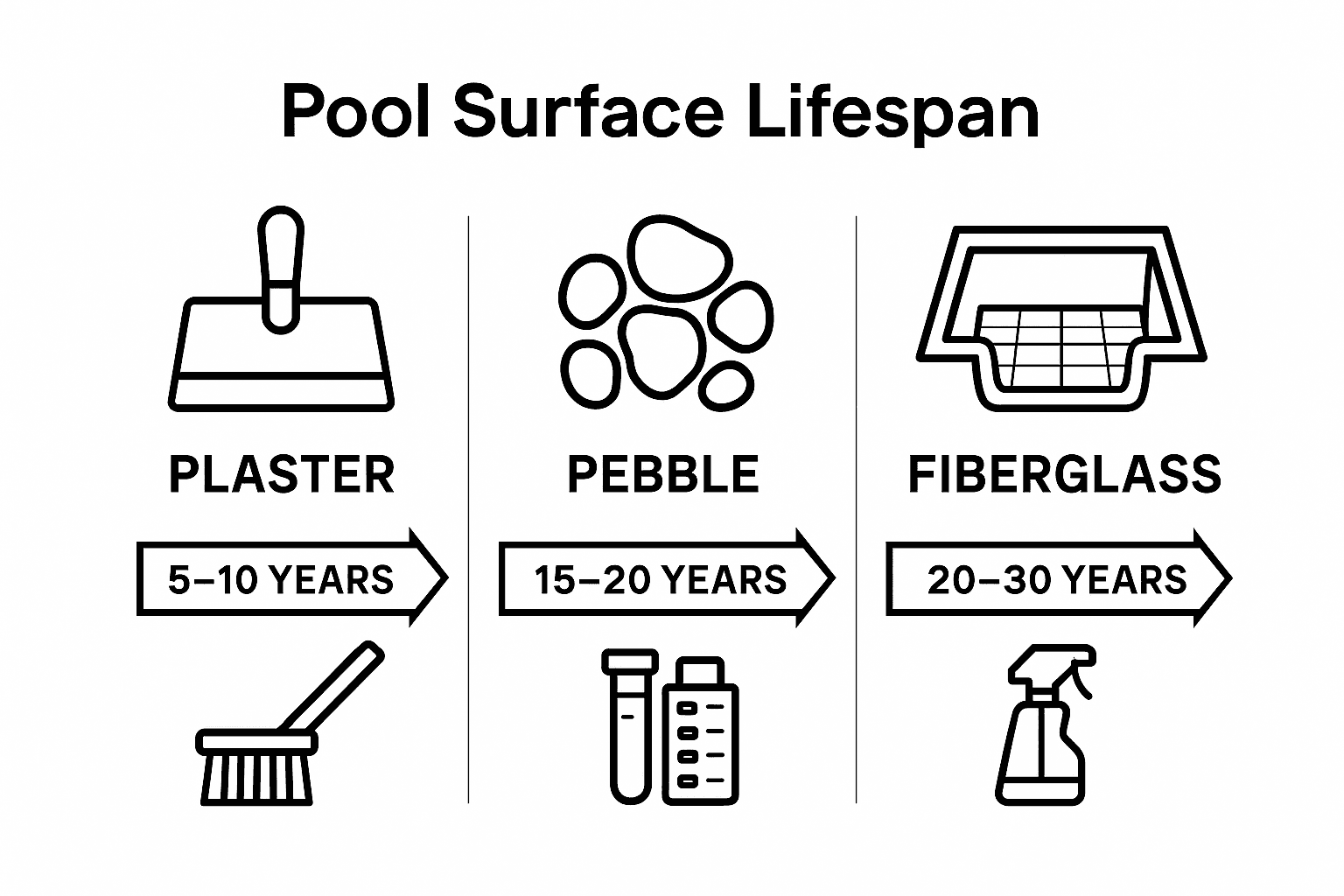
The most common pool surface materials include concrete, fiberglass, vinyl, and aggregate finishes. Concrete pools with traditional plaster coatings can endure decades with proper maintenance, typically lasting 10-15 years before requiring resurfacing. Fiberglass pools offer exceptional longevity, with potential lifespans exceeding 30 years due to their non-porous, smooth surfaces that resist algae growth and chemical degradation.
Specialized pool surface options provide distinct advantages:
- Quartz Surfaces
- 10-14 year lifespan
- Enhanced water color and visual appeal
- Moderate durability
- Pebble Surfaces
- 15-20+ year durability
- Excellent aesthetic texture
- Potentially rougher on feet and pool equipment
- Plaster Surfaces
- Classic, affordable option
- 7-10 year typical lifespan
- Smooth and traditional appearance
Understanding the characteristics of each surface helps pool owners make informed decisions about initial installation and long-term maintenance strategies. Factors like climate, usage frequency, and chemical balance significantly impact surface longevity and performance.
Pro Tip: Surface Comparison Research: Consult with professional pool contractors to evaluate surface options specific to your local environment and personal pool usage patterns before making a final selection.
Here’s a comparison of major pool surface materials to help inform your selection:
| Surface Material | Typical Lifespan | Maintenance Needs | Notable Strengths |
|---|---|---|---|
| Plaster | 7-10 years | Regular balancing | Affordable, smooth finish |
| Quartz | 10-14 years | Occasional checks | Enhanced color, moderate durability |
| Pebble | 15-20+ years | Minimal if balanced | Textured look, very durable |
| Fiberglass | 30+ years | Low, easy cleaning | Highly resistant, non-porous |
| Vinyl | 5-10 years | Liner replacement | Soft texture, versatile designs |
Warning Signs Your Pool Needs Resurfacing
Maintaining a swimming pool requires vigilant monitoring of surface conditions to prevent extensive damage and costly repairs. Home inspectors consistently identify specific indicators that signal the urgent need for pool resurfacing, helping homeowners recognize when professional intervention becomes necessary.
Visual and structural warning signs manifest in multiple ways, each representing potential underlying issues that compromise pool integrity. Surface deterioration can present through several distinct characteristics:
- Visible Cracks
- Hairline craze cracks
- Structural fractures
- Cracks extending to tile and coping
- Texture Changes
- Rough or uneven surface
- Pitting and erosion
- Noticeable surface degradation
- Staining and Discoloration
- Persistent chemical stains
- Algae-related discoloration
- Uneven coloration indicating surface breakdown
Critical warning signs like plaster peeling (spalling) suggest advanced surface damage. When moisture penetrates beneath the pool’s coating, structural complications can emerge rapidly. Delaying necessary resurfacing might transform minor repairs into major reconstruction projects, potentially increasing repair costs exponentially.
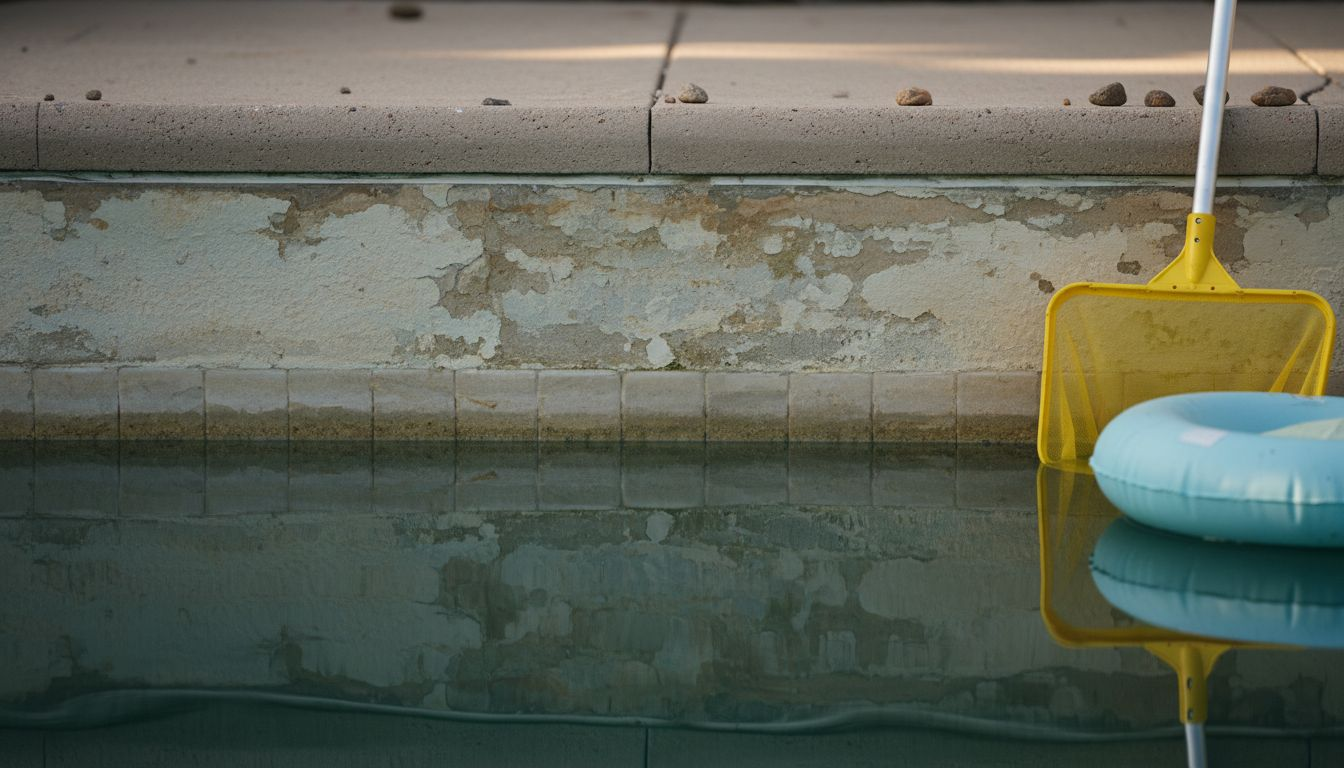
Pro Tip: Quarterly Visual Inspection: Conduct a detailed visual examination of your pool surface every three months, photographing any changes to track progression and consult professionals promptly when warning signs appear.
Factors That Accelerate Surface Deterioration
Home inspectors reveal multiple critical factors that rapidly compromise pool surface integrity, making proactive maintenance essential for pool owners. Understanding these destructive elements helps homeowners implement preventative strategies that extend their pool’s functional lifespan and minimize expensive repairs.
Chemical and environmental factors play significant roles in accelerating surface deterioration. Water chemistry imbalances represent the most immediate threat, with extreme pH levels causing microscopic damage to pool surfaces. Chlorine concentration, alkalinity, and mineral content can create cascading effects that gradually erode protective coatings and create vulnerabilities in the pool’s structural integrity.
Key factors that accelerate pool surface breakdown include:
- Chemical Challenges
- Inconsistent pH levels
- Excessive chlorine concentration
- Mineral buildup and scaling
- Environmental Stressors
- Prolonged direct sunlight exposure
- Extreme temperature fluctuations
- Frequent freeze-thaw cycles
- Maintenance-Related Issues
- Irregular cleaning practices
- Delayed repair of minor damages
- Improper chemical application techniques
Structural complications can emerge when multiple resurfacing layers are applied without proper preparation. Moisture penetration beneath existing coatings creates additional risks, potentially causing corrosion of underlying metal structures and compromising the pool’s foundational integrity.
Pro Tip: Chemical Balance Monitoring: Invest in a reliable digital water testing kit and check your pool’s chemical levels weekly, adjusting immediately to maintain optimal balance and prevent surface degradation.
These pool care strategies help maximize your surface longevity:
| Strategy | Benefit | Recommended Frequency |
|---|---|---|
| Professional Inspection | Detect early issues | Annually |
| Chemical Testing | Prevent deterioration | Weekly |
| Surface Cleaning | Minimize deposits and stains | Weekly |
| Visual Documentation | Track surface changes | Every three months |
Risks of Delaying Pool Resurfacing
Pool maintenance experts warn that postponing necessary resurfacing can trigger a cascade of increasingly expensive and complex structural problems, transforming what could be a manageable repair into a potentially catastrophic pool renovation scenario.
Surface degradation accelerates exponentially when minor issues are ignored, creating compounding challenges that extend far beyond cosmetic concerns. Water chemistry interactions, structural micro-fractures, and environmental stressors combine to weaken pool surfaces, ultimately compromising the entire aquatic infrastructure. The most critical risks associated with delaying resurfacing include:
- Structural Integrity Risks
- Progressive surface deterioration
- Increased potential for major structural failures
- Compromised pool shell integrity
- Financial Consequences
- Exponentially increasing repair costs
- Potential complete pool reconstruction requirements
- Decreased property value
- Functional Performance Issues
- Water leakage and continuous water loss
- Reduced pool efficiency
- Equipment malfunction risks
Moisture penetration represents a particularly insidious threat, silently eroding underlying structures and creating hidden damage that may not become visible until significant structural compromise occurs. Corrosion of metal components, expansion of microscopic cracks, and progressive surface breakdown can transform a minor repair into a complete pool reconstruction project.
Pro Tip: Early Intervention Strategy: Schedule professional pool inspections annually and address any surface irregularities immediately to prevent minor issues from escalating into major, costly renovations.
Protect Your Pool Investment with Expert Resurfacing Solutions
Understanding the signs that your pool needs resurfacing is crucial to maintaining its beauty and structural integrity. This article highlights key challenges like surface deterioration, chemical imbalances, and the risks of delaying repairs. If you notice cracks, rough textures, or persistent staining, acting now can save you from costly future damage and ensure your pool remains a safe and inviting space.

Classic Marcite has been the trusted choice for pool resurfacing and renovation in Orlando and Jacksonville, Florida, since 1988. With unmatched experience resurfacing over 100,000 pools, including residential and commercial projects, we specialize in durable finishes like Pebble Tec® that enhance both aesthetics and longevity. Don’t wait until minor issues escalate into major repairs. Visit Classic Marcite to learn more about our comprehensive pool resurfacing services and get your free consultation today. Secure your pool’s future with craftsmanship you can depend on.
Frequently Asked Questions
What are the signs that my pool needs resurfacing?
Visible cracks, rough or uneven texture, persistent algae growth, water leakage, and staining or discoloration are all indicators that your pool may need resurfacing.
How often should I inspect my pool for resurfacing needs?
It is recommended to conduct a visual inspection of your pool surface every three months, with a comprehensive professional inspection at least once a year to catch potential resurfacing needs early.
What factors can accelerate the need for pool resurfacing?
Factors include water chemistry imbalances, environmental stressors like extreme temperatures and sunlight, and maintenance-related issues such as irregular cleaning practices and delayed repairs.
What are the risks of delaying pool resurfacing?
Delaying resurfacing can lead to structural integrity risks, increased repair costs, and functional performance issues like water leakage and equipment malfunctions.